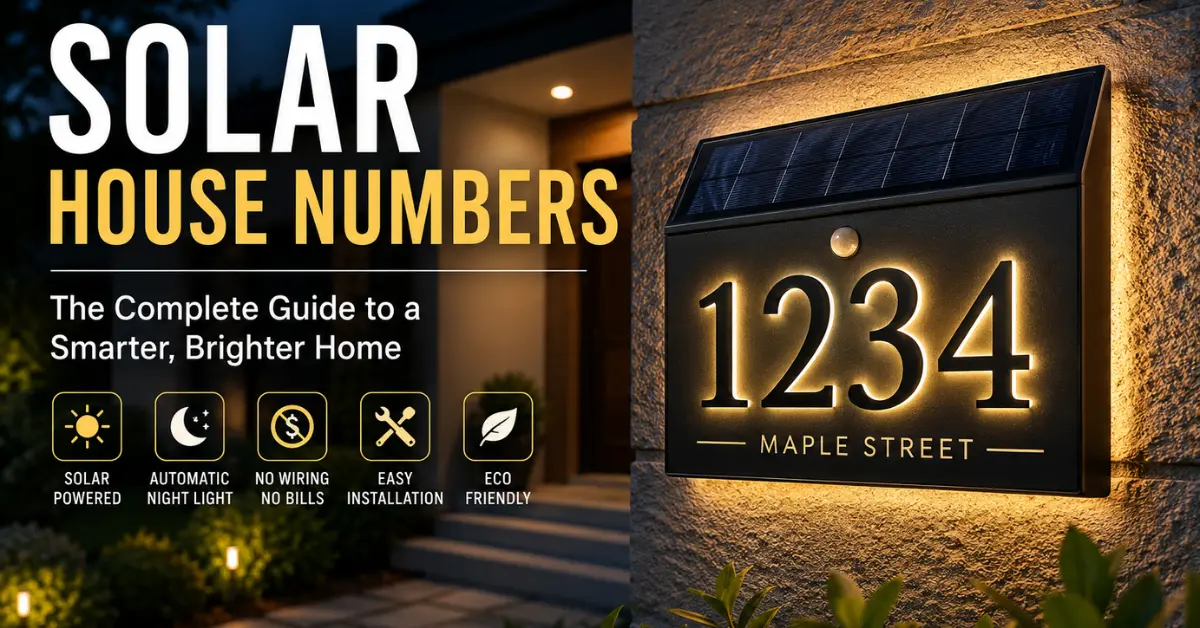
Your home deserves to be found — day or night. Solar house numbers are the smartest, most stylish way to display your address, combining elegant home décor with powerful solar technology. They glow automatically every night, cost nothing to run, and take less than 30 minutes to install. Once you switch to solar house numbers, you will wonder how you ever managed without them.
Think about the last time a guest called you saying they could not find your house in the dark. Or imagine an emergency vehicle slowing down on your street, searching for the right address. Solar house numbers solve this problem permanently. They light up your entryway from dusk to dawn, making your home instantly visible from the street — without any wiring, electricity costs, or complicated setup.
Whether you want a sleek modern backlit plaque, a rustic personalized sign, or elegant individual solar number tiles, there is a style to match every home. In this complete guide, we cover everything — how solar house numbers work, which styles suit your home best, installation tips, maintenance advice, and answers to the most common questions homeowners ask. Let’s help you find the perfect solar house numbers for your home.
If you have ever struggled to find a house number in the dark, you already understand why solar house numbers are becoming one of the most popular home décor upgrades today. They are practical, stylish, easy to install, and they cost nothing to run. Whether you are renovating your entryway or simply want a smarter way to display your address, solar house numbers check every box.
This guide covers everything you need to know — from how solar house numbers work to the best styles, installation tips, and common mistakes to avoid.
What Are Solar House Numbers?
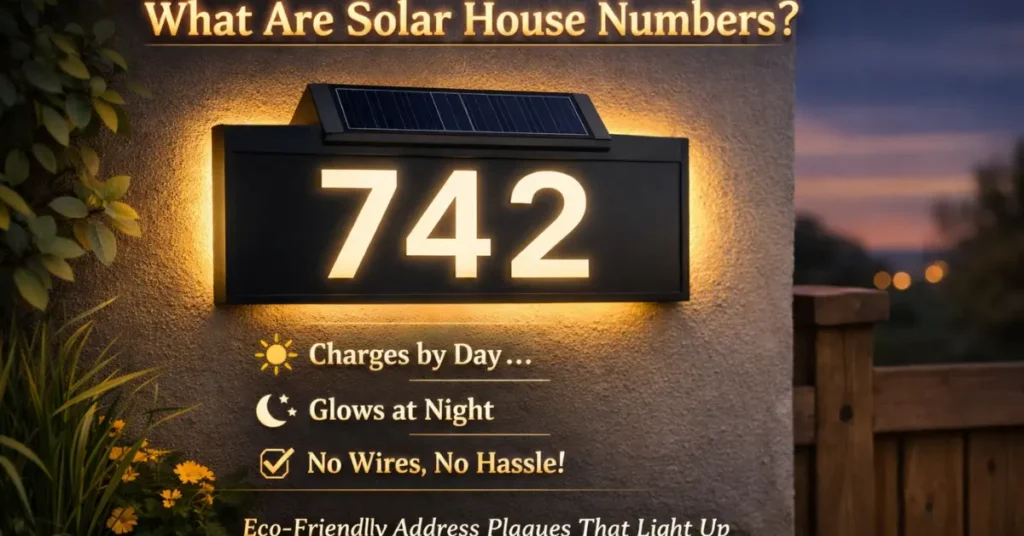
Solar house numbers are address plaques or signs that use a small built-in solar panel to charge a battery during the day. At night, that stored energy powers LED lights that illuminate your house numbers automatically. No wiring. No electricity bill. No flipping a switch.
They sit on your wall, fence, or post — quietly soaking up sunlight all day — and glow from dusk to dawn without any effort from you.
How Do Solar House Numbers Work?
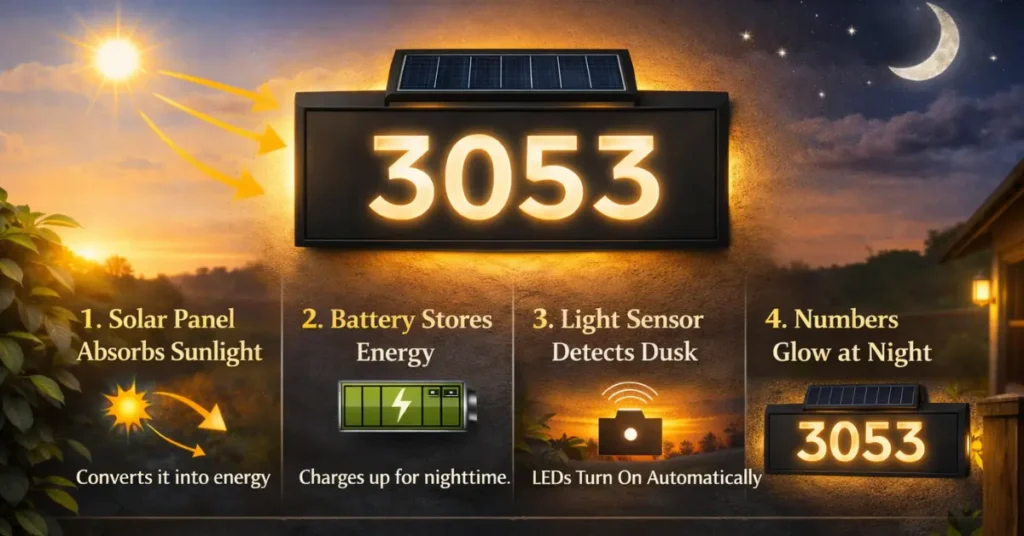
The science behind solar house numbers is simple but clever:
- A small photovoltaic (solar) panel on the sign absorbs sunlight and converts it into electrical energy.
- That energy charges a rechargeable battery inside the unit.
- A built-in light sensor detects when it gets dark and automatically switches the LED lights on.
- The LEDs illuminate your house numbers through the night and switch off again at sunrise.
Most quality solar house numbers provide 8 to 12 hours of illumination on a full charge — more than enough for any night. Even on overcast days, the panels still collect enough diffused light to keep the battery topped up.
Why Choose Solar House Numbers Over Traditional Options?
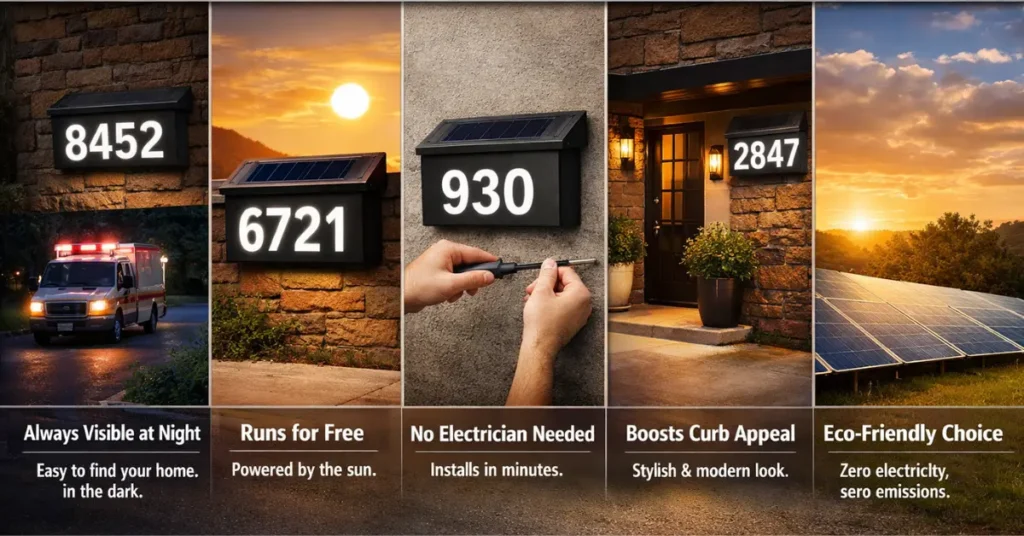
Many homeowners overlook this upgrade, but solar house numbers offer clear advantages that regular address signs simply cannot match.
They are always visible at night
Emergency responders, delivery drivers, and guests can find your home quickly — even on the darkest streets. Studies show that well-lit house numbers can reduce emergency response times because first responders locate addresses faster.
They run for free
Once you install solar house numbers, you pay nothing to operate them. The sun does all the work.
No electrician needed
Traditional wired illuminated signs require a professional installation and ongoing electricity costs. Solar house numbers attach to your wall in minutes with basic tools.
They add serious curb appeal
A glowing, modern address sign transforms the look of your entrance. It signals care and attention to detail — something every homeowner wants their home to convey.
They are eco-friendly
Solar house numbers use zero grid electricity, which means zero carbon emissions during operation. For environmentally conscious homeowners, this is a meaningful choice.
Popular Styles of Solar House Numbers
One of the best things about solar house numbers is the range of designs available. You can find a style to suit any home aesthetic.
Backlit LED Plaques
These feature individual numerals mounted on a backing plate, with LED lights shining through or around each number. They create a striking halo glow effect that looks especially elegant on modern or contemporary homes.
Illuminated Sign Boards
A full rectangular or square plaque with your house numbers engraved or printed, illuminated from behind. These suit craftsman, farmhouse, and traditional home styles beautifully.
Individual Solar Number Tiles
Each digit is a separate solar-powered tile. You arrange them yourself, which makes it easy to customize spacing and layout. Great for modern and minimalist homes.
Solar Post Numbers
Mounted on a freestanding post near your driveway or walkway, these are ideal when your front door is set far back from the street.
Personalized and Custom Solar Numbers
Many makers offer engraved personalization your family name, street name, or decorative elements alongside your solar house numbers. These make a wonderful housewarming gift too.
What to Look for When Buying Solar House Numbers
Not all solar house numbers are equal. Here is what to check before you buy:
Battery capacity and backup time
Look for units with at least 1200mAh batteries that offer a minimum of 8 hours of light after a full charge. Some premium models offer up to 15 hours.
Panel quality
Monocrystalline solar panels are the most efficient — they charge faster and perform better on cloudy days compared to polycrystalline panels.
LED brightness and color
Warm white (2700–3000K) creates a welcoming, cozy glow. Cool white (5000–6500K) looks sharp and modern. Amber suits traditional homes well. Make sure the LEDs are bright enough to be visible from the street — look for at least 30–50 lumens.
Weatherproofing rating
Your solar house numbers live outside year-round. Look for an IP65 rating or higher, which means the unit is fully dust-tight and protected against rain. IP67 or IP68 means it can withstand temporary or prolonged submersion — ideal if you live in a very rainy climate.
Material and finish
Stainless steel, brushed aluminum, and powder-coated metal all hold up well outdoors. Avoid low-quality plastics that yellow and crack over time.
Number size and visibility
Most experts recommend number height of at least 4 inches for visibility from the street. If your home sits far back, go for 6 inches or larger.
How to Install Solar House Numbers
Installing solar house numbers is a satisfying weekend project. Here is a step-by-step overview:
1. Choose your mounting location. Pick a spot that gets at least 4 to 6 hours of direct sunlight per day. South-facing walls get the most sun in the northern hemisphere.
2.Plan your layout. Hold the sign or individual numbers against the wall and use a pencil to mark the screw positions. Use a level to make sure everything lines up straight.
3.Drill pilot holes if needed. For brick or masonry walls, use a masonry drill bit. For wood or vinyl siding, a standard drill bit works fine.
4.Insert wall anchors. If your wall surface requires anchors, tap them in gently before screwing in the mounting hardware.
5.Secure the sign. Attach the backing plate or individual number mounts firmly to the wall. Do not overtighten, as this can crack the housing.
6.Test before you finish. Most solar house numbers have a test button or a manual on/off switch. Check that the LEDs light up before you step back inside.
7.Let it charge. Leave the solar panel in sunlight for a full day before the first night use, so the battery reaches a full charge.
Best Placement Tips for Solar House Numbers
- Where you place your solar house numbers matters for both visibility and charging performance.
- Mount them at eye level or slightly above — between 4 and 6 feet from the ground works for most homes.
- Make sure no tree branches, roof overhangs, or other features block sunlight from reaching the solar panel during peak hours.
- Face the solar panel toward the south (in the northern hemisphere) for maximum daily charging.
- Avoid placing solar house numbers directly above or below bright porch lights, as this can confuse the automatic light sensor and cause the numbers to switch on and off at the wrong times.
- Make sure the numbers are clearly visible from the street in both directions, not just head-on.
Maintaining Your Solar House Numbers
Solar house numbers are nearly maintenance-free, but a little care goes a long way.
Clean the solar panel every few months. Dust, bird droppings, and pollen build up on the panel surface and reduce charging efficiency. A damp cloth is all you need.
Replace the battery every 2 to 3 years. Rechargeable batteries gradually lose capacity over time. When your solar house numbers start switching off before dawn, a fresh battery usually fixes the problem. Most units use standard AA or AAA NiMH rechargeable batteries that cost a few dollars.
Check for water ingress after heavy storms. Even well-sealed units can develop small cracks over years of temperature changes. If LEDs start flickering or dimming after rain, allow the unit to dry out fully and check the seal.
Solar House Numbers and Home Value
Here is something most competitors do not mention: solar house numbers can actually improve your home’s perceived value. Real estate professionals consistently note that curb appeal plays a significant role in a buyer’s first impression and willingness to pay asking price.
An illuminated, stylish address sign signals that the homeowner pays attention to detail. It shows the home is well-maintained and thoughtfully decorated — all cues that influence a buyer’s confidence.
Unlike solar panel installations (which can sometimes complicate home sales depending on whether the system is owned or leased), solar house numbers are a simple, fully owned décor item that adds charm without any legal or financial complexity at resale.
Solar House Numbers as a Gift Idea
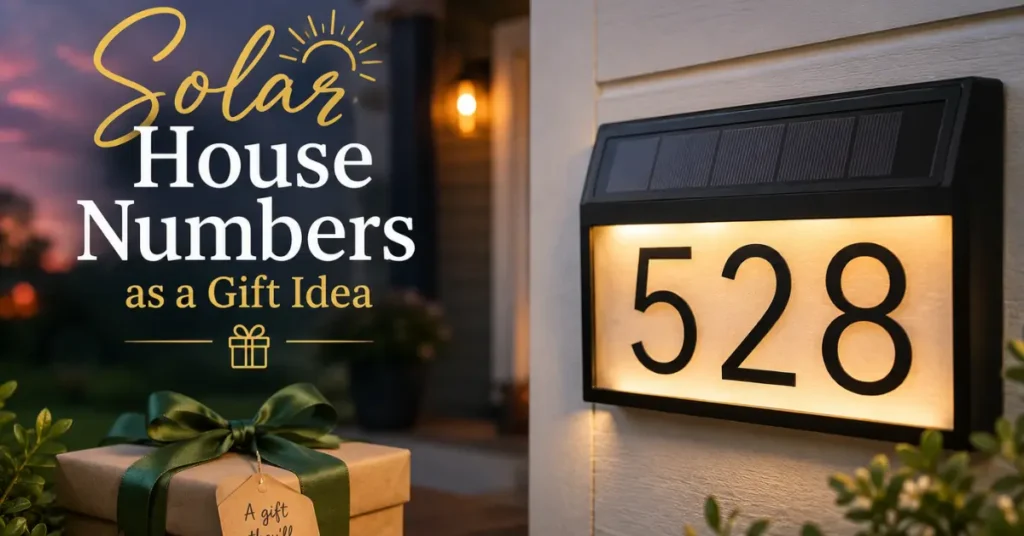
Looking for a practical yet stylish housewarming gift? Solar house numbers are an excellent choice. They are personal, immediately useful, and far more memorable than a standard candle or kitchen item.
Many sellers offer personalized solar house numbers with custom engraving — you can add a family name, a decorative motif, or even a street name alongside the numbers. This turns a functional item into a genuinely thoughtful gift.
Common Mistakes to Avoid
Even with such an easy product, a few pitfalls trip people up:
- Placing the solar panel in a shaded spot. Even partial shading significantly reduces charging output. Always check sun exposure throughout the day before drilling.
- Choosing numbers that are too small. Numbers under 3 inches tall are hard to read from a moving vehicle, especially at night.
- Ignoring the IP rating. A unit without a weatherproofing rating will fail quickly in rain or humidity.
- Buying the cheapest option. Very inexpensive solar house numbers often use low-quality panels and batteries that fail within a year. Spending a little more upfront saves money over time.
Frequently Asked Questions About Solar House Numbers
Do solar house numbers work in winter or on cloudy days?
Yes. Solar house numbers still charge on overcast days, though they charge more slowly than on clear days. In winter, charging time may be shorter due to fewer daylight hours, so choose a model with a larger battery capacity if you live in a climate with long, dark winters.
How long do solar house numbers last?
The LED lights themselves can last 50,000 hours or more — effectively the lifetime of the product. The rechargeable battery is the component that needs occasional replacement, typically every 2 to 3 years. The housing and panel should last 10 or more years with basic care.
Can I install solar house numbers on a shaded wall?
It is not ideal. The solar panel needs direct or at least bright indirect sunlight for several hours each day to maintain a full charge. If your entryway is heavily shaded, consider a post-mounted solar house number placed in a sunnier spot near your driveway or path.
Are solar house numbers bright enough to see from the street?
Quality solar house numbers with LED illumination are clearly visible from the street at night. Look for products that specify lumen output — 30 lumens or more is a good benchmark for street-level visibility.
Do I need any tools to install solar house numbers?
Most installations require only a drill, a level, and a screwdriver. Many solar house number kits include the screws and wall anchors you need. The average installation takes 15 to 30 minutes.
Will solar house numbers interfere with my home’s existing outdoor lighting?
No. Solar house numbers operate independently of your home’s electrical system. However, as noted above, placing them too close to bright porch lights can confuse the automatic sensor. Keep them at least 2 feet away from other strong light sources.
Are there solar house numbers that work without direct sunlight — for example, indoors or in covered porches?
Standard solar house numbers need outdoor sunlight. If your porch is fully covered and shaded, consider a wired LED address sign instead, or look for solar signs with a separate detachable panel that you can position in a sunny spot and run a cable to the sign itself.
What is the best material for outdoor solar house numbers?
: Brushed stainless steel and powder-coated aluminum are the most durable options. They resist rust, UV damage, and temperature extremes. Solid brass is a premium option with a classic look that develops a beautiful patina over time.
Final Thoughts
Solar house numbers are one of those rare home upgrades that combine good looks, genuine function, and zero ongoing cost. They make your home easier to find, safer for visitors and emergency services, and simply more attractive from the street.
Whether you choose a sleek modern backlit plaque, a rustic personalized sign, or smart individual solar number tiles, you are making a choice that serves your home every single night — powered entirely by the sun.
Ready to upgrade your entryway? Explore our collection of solar house numbers and find the perfect style for your home today.