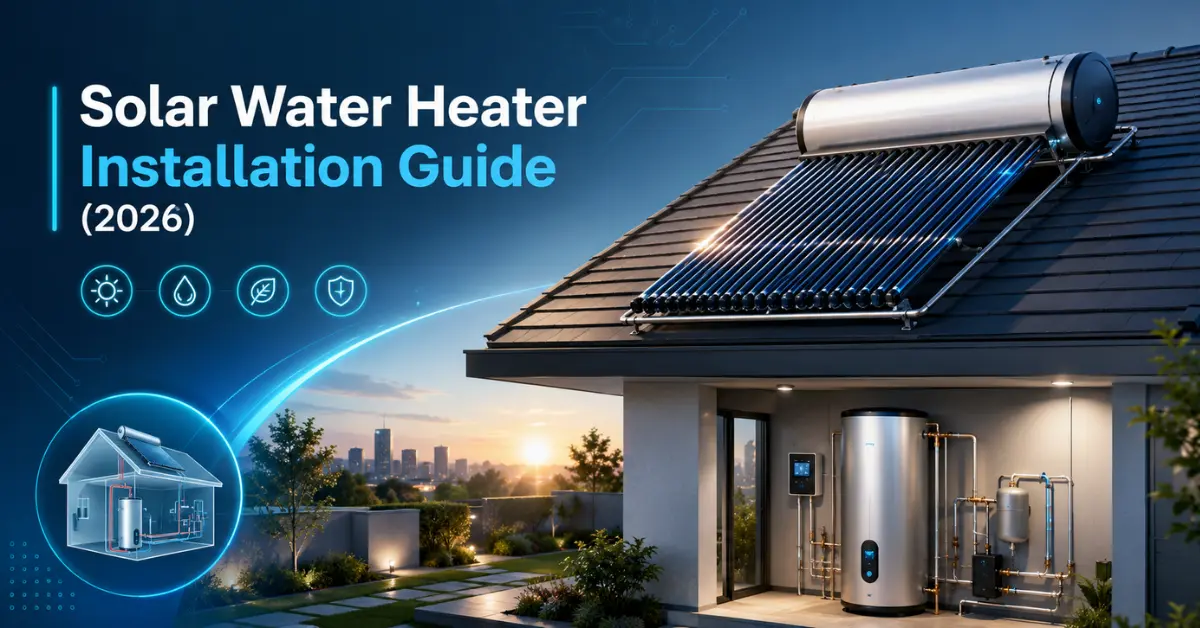
Hot water is one of the biggest energy expenses in any home. A solar water heater installation can cut your water heating bills by 50% to 80% — and in many cases, it pays for itself in just a few years. Whether you are building a new home or upgrading an existing system, this guide walks you through everything you need to know before, during, and after installation.
What Is a Solar Water Heater and How Does It Work?
A solar water heater uses energy from the sun to heat water for your home. It collects sunlight through solar collectors mounted on your roof, transfers that heat to water, and stores the heated water in an insulated tank until you need it.
Unlike solar panels (PV panels) that generate electricity, solar water heaters focus entirely on producing hot water. This makes them a simpler, more cost-effective solution for households that want to lower energy bills without a full solar panel system.
Most systems include:
- Solar collectors (flat-plate or evacuated tube)
- A storage tank (insulated to retain heat)
- A heat transfer fluid or direct water loop
- A backup heater (electric or gas) for cloudy days
- A controller or pump (in active systems)
Types of Solar Water Heater Systems
Choosing the right type starts with understanding your climate, budget, and hot water usage. Here are the main types:
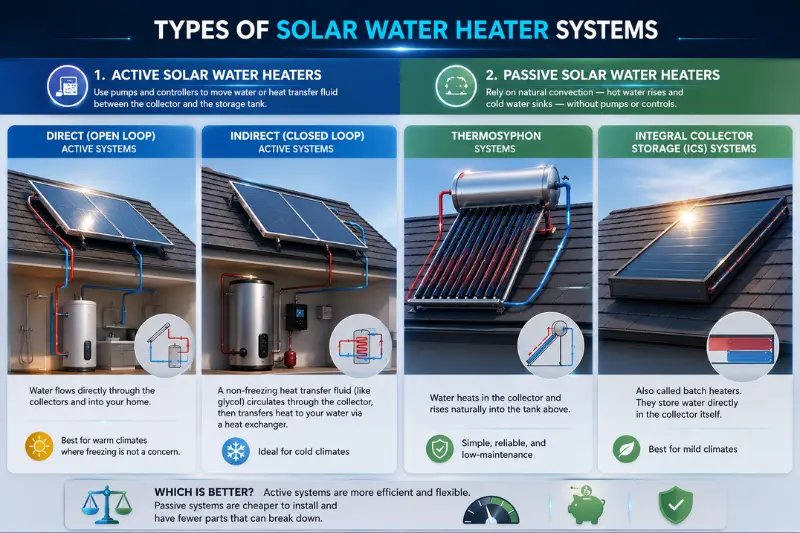
1. Active Solar Water Heaters
Active systems use pumps and controllers to move water or heat transfer fluid between the collector and the storage tank.
Direct (Open Loop) Active Systems — Water flows directly through the collectors and into your home. Best for warm climates where freezing is not a concern.
Indirect (Closed Loop) Active Systems — A non-freezing heat transfer fluid (like glycol) circulates through the collector, then transfers heat to your water via a heat exchanger. Ideal for cold climates.
2. Passive Solar Water Heaters
Passive systems rely on natural convection — hot water rises and cold water sinks — without pumps or controls.
Thermosyphon Systems — Water heats in the collector and rises naturally into the tank above. Simple, reliable, and low-maintenance.
Integral Collector Storage (ICS) Systems — Also called batch heaters. They store water directly in the collector itself. Best for mild climates.
Which is better? Active systems are more efficient and flexible. Passive systems are cheaper to install and have fewer parts that can break down.
Is Your Home Ready for Solar Water Heater Installation?
Before you schedule an installer, check these factors:
- Roof condition — Your roof should be in good condition with at least 10 to 15 years of life remaining. Collectors are heavy; a weak roof may need reinforcement.
- Roof orientation — South-facing roofs (in the Northern Hemisphere) get the most sun exposure. Southeast or southwest orientations also work well.
- Roof pitch — A slope between 20° and 60° is ideal for most solar collector types.
- Shading — Nearby trees, chimneys, or tall buildings that cast shade will reduce system performance.
- Available space — A typical family of four needs 40 to 80 square feet of collector area.
- Local climate — If you live in a freezing climate, you need a freeze-protected system (indirect active or thermosyphon with freeze protection).
Solar Water Heater Installation: Step-by-Step Process
Here is exactly what happens during a professional solar water heater installation:
Step 1 — Site Assessment
A certified installer evaluates your roof, sun exposure, water usage, and existing water heating setup. They calculate the correct system size based on your household’s daily hot water demand.
Step 2 — System Design and Sizing
The installer designs a system tailored to your home. A household of two to three people typically needs one collector panel and a 40- to 60-gallon tank. Larger families need more collector area and storage capacity.
Step 3 — Permits and Approvals
Most localities require permits for solar water heater installation. Your installer handles this in most cases. Installation without the proper permits can affect your home insurance and resale value, so never skip this step.
Step 4 — Mounting the Solar Collectors
Collectors are mounted on the roof using racking hardware. Roof penetrations are sealed with flashing to prevent leaks — a critical step that separates professional installations from amateur ones. Improper flashing is one of the most common causes of roof leaks after solar installation.
Step 5 — Installing the Storage Tank
The insulated storage tank is typically placed in a utility room, garage, or basement near the existing water heater. In thermosyphon systems, the tank sits directly above the collector on the roof.
Step 6 — Plumbing and Wiring
Pipes connect the collector to the storage tank. Active systems require electrical wiring for the pump and controller. All connections are pressure-tested before the system goes live.
Step 7 — Connecting the Backup Heater
Your existing electric or gas water heater is connected as a backup. This ensures you always have hot water — even on overcast days or during peak demand.
Step 8 — System Testing and Commissioning
The installer fills the system, checks for leaks, tests the pump and controller, and confirms the system is heating water correctly. You receive a walkthrough of how to operate and monitor the system.
Solar Water Heater Installation Cost Breakdown
Competitors rarely break down costs clearly. Here is a realistic picture:
| Item | Estimated Cost |
|---|---|
| Flat-plate collector system (2–3 panels) | $2,000 – $4,000 |
| Evacuated tube system | $3,000 – $6,000 |
| Storage tank | $500 – $1,500 |
| Labor and installation | $1,000 – $3,000 |
| Permits and inspections | $100 – $500 |
| Total installed cost | $3,000 – $10,000 |
Federal Tax Credit — In the United States, the Residential Clean Energy Credit covers 30% of the total system cost, including installation. Many states and utilities offer additional rebates on top of this.
Payback period — Most homeowners see full payback in 5 to 10 years, depending on their location, energy rates, and hot water usage. The system lasts 20+ years, so the savings period is long.
What Competitors Are Not Telling You: Hidden Factors That Affect Performance
Water Quality Matters
Hard water with high mineral content causes scale buildup inside collectors and pipes, dramatically reducing efficiency over time. If you live in a hard water area, your installer should recommend a descaling plan or a closed-loop system that keeps hard water away from the collectors entirely.
The Backup Heater Setup Is Critical
Many homeowners discover their backup heater is sized incorrectly or not integrated properly, leading to cold showers on cloudy days. Make sure your installer sizes the backup heater for your full daily demand — not just your average demand.
Freeze Protection Is Non-Negotiable in Cold Climates
Direct systems can burst pipes in freezing temperatures. If you live where temperatures drop below 32°F (0°C), insist on either a closed-loop system with glycol or a drainback system that empties the collectors automatically when temperatures drop.
Roof Angle and Orientation Make a Bigger Difference Than Most Guides Admit
A roof facing 30° west of south loses approximately 10% efficiency. A roof at 10° pitch instead of 30° loses another 5 to 15%. These numbers add up over 20 years. If your roof is not ideal, a ground-mounted collector array may be a better option.
DIY vs. Professional Solar Water Heater Installation
Some handy homeowners consider doing their own solar water heater installation companies. Here is an honest comparison:
DIY Installation Pros:
- Lower upfront cost (save $1,000 to $3,000 on labor)
- Full control over the process
DIY Installation Cons:
- Most manufacturers void warranties for self-installed systems
- Improper roof penetrations cause leaks that cost thousands to fix
- Incorrect plumbing can cause backflow, pressure problems, or freezing damage
- You may not qualify for tax credits without licensed installer documentation
- Permits often require a licensed contractor
Our recommendation: DIY is only practical for simple thermosyphon or batch heater systems in warm climates. For active systems or cold climates, always hire a certified solar thermal installer.
How to Choose a Solar Water Heater Installer
Not all installers are equal. Here is what to look for:
- NABCEP Certification (North American Board of Certified Energy Practitioners) — This is the gold standard for solar thermal installers in the U.S.
- Licensed and insured — Always verify the contractor’s license number with your state licensing board
- Experience with solar thermal (not just PV solar) — Many solar panel companies have little experience with solar water heater installation
- Manufacturer-certified — Ask if the installer is certified by the manufacturer of the equipment they plan to use
- Written warranty on workmanship — Get at least a 2- to 5-year workmanship warranty in writing
- References — Ask for at least three references from past solar water heater installation jobs
Maintenance After Solar Water Heater Installation
A well-maintained solar water heater lasts 20 to 30 years. Here is a simple maintenance schedule:
Every 6 months:
- Visually inspect collectors for debris, shading from new tree growth, or physical damage
- Check that the pump runs (active systems)
- Monitor your energy bills — an unexpected spike often signals a system problem
Every 1 to 2 years:
- Check the heat transfer fluid level and condition (closed-loop systems)
- Inspect pipe insulation for cracks or UV degradation
- Flush the storage tank to remove sediment
Every 3 to 5 years:
- Professional inspection and tune-up
- Replace the anode rod in the storage tank (same as conventional water heaters)
- Test the pressure relief valve
Every 5 to 10 years:
- Replace heat transfer fluid (glycol degrades over time)
- Inspect and re-seal roof penetrations and flashing
Signs Your Solar Water Heater System Needs Attention
Watch for these warning signs between scheduled maintenance:
- Your hot water takes significantly longer to heat up than before
- Your backup heater runs constantly even on sunny days
- You notice water stains or rust around pipe connections
- You hear unusual noises from the pump or tank
- Your storage tank releases water from the pressure relief valve regularly
- Energy bills rise without any change in usage habits
Solar Water Heater vs. Heat Pump Water Heater: Which Is Better?
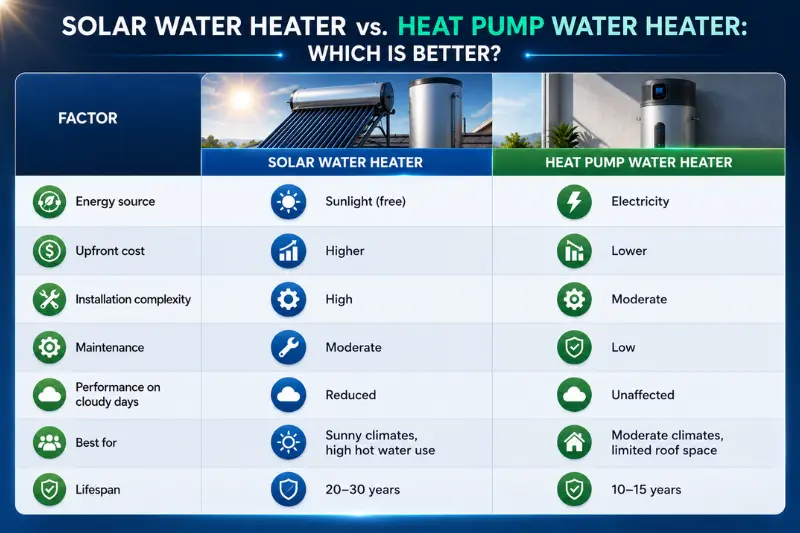
Many homeowners weigh solar water heater installation against heat pump water heaters. Here is a quick comparison:
| Factor | Solar Water Heater | Heat Pump Water Heater |
|---|---|---|
| Energy source | Sunlight (free) | Electricity |
| Upfront cost | Higher | Lower |
| Installation complexity | High | Moderate |
| Maintenance | Moderate | Low |
| Performance on cloudy days | Reduced | Unaffected |
| Best for | Sunny climates, high hot water use | Moderate climates, limited roof space |
| Lifespan | 20–30 years | 10–15 years |
Bottom line: In sunny regions with high hot water demand, solar water heaters deliver better long-term savings. In cloudy climates or homes with limited roof space, a heat pump water heater may be the smarter choice.
FAQs
How much hot water can a solar water heater produce?
A properly sized solar water heater can supply 80% to 100% of your household’s hot water needs on sunny days. On cloudy days, the backup heater fills the gap. Over the year, most systems cover 50% to 80% of total hot water demand.
How long does solar water heater installation take?
Most residential solar water heater installations take one to three days. Simple passive systems may be done in a single day. Active systems with more complex plumbing and electrical work take longer.
Do solar water heaters work in winter or on cloudy days?
Yes, but with reduced output. Evacuated tube collectors work better in cold and overcast conditions than flat-plate collectors. Your backup heater ensures continuous hot water supply year-round.
Will a solar water heater work if my roof faces east or west?
East- and west-facing roofs reduce efficiency but do not make solar water heating impossible. An east-facing system produces more hot water in the morning; a west-facing system performs better in the afternoon. A certified installer can calculate your expected output based on your specific roof orientation.
Do I need planning permission or permits for solar water heater installation?
In most U.S. cities and counties, yes. Building permits are typically required. Some areas also have HOA restrictions. Your installer should handle permit applications. Always confirm before any work begins.
What is the lifespan of a solar water heater?
Solar collectors typically last 20 to 30 years. Storage tanks last 10 to 20 years. With proper maintenance, the overall system lifespan is 20+ years, making it one of the most durable home energy investments available.
Can I add a solar water heater to my existing hot water system?
Yes. In most cases, your existing gas or electric water heater stays in place as a backup. The solar system preheats the water before it enters the conventional heater, reducing how often the backup needs to run.
What happens if the solar water heater leaks?
Leaks in the roof penetrations, pipes, or storage tank should be fixed immediately. Small leaks can cause major water damage and mold growth if ignored. Most workmanship warranties cover leaks within the first several years. Call your installer promptly if you notice any moisture, rust, or water staining.
Are solar water heaters worth it in areas with a lot of cloud cover?
They can be, especially with evacuated tube collectors, which are more efficient in diffuse light. However, payback periods will be longer in cloudy climates. A detailed analysis based on your local solar resource data (available from the National Renewable Energy Laboratory) will give you the clearest answer for your specific location.
What warranty should I expect on a solar water heater system?
Look for at least a 5- to 10-year warranty on collectors, a 5- to 10-year warranty on the storage tank, and a 2- to 5-year workmanship warranty from the installer. Premium systems come with warranties up to 25 years on collectors.
Final Thoughts
Solar water heater installation is one of the most cost-effective energy upgrades a homeowner can make. It reduces energy bills immediately, qualifies for federal and state incentives, and delivers reliable hot water for 20 to 30 years with modest maintenance.
The key to a successful installation is choosing the right system type for your climate, hiring a certified installer, getting the permits done correctly, and following a simple maintenance routine. Skip any of those steps, and you risk leaks, reduced performance, and voided warranties.
Done right, a solar water heater installation is a long-term investment that pays back far more than it costs — in savings, comfort, and energy independence.