Roofing and solar are two of the biggest investments you will make in your home — and they are far more connected than most homeowners realize. Your roof is not just a surface your solar panels sit on. It is the foundation that determines how well your solar system performs, how long it lasts, and how much it ultimately costs you.
Get the timing and planning right, and roofing and solar work together for 25–30 years of trouble-free performance. Get it wrong, and you could face thousands of dollars in unnecessary removal and reinstallation costs down the road.
This guide covers everything most competitors skip — the real relationship between roofing and solar, how to time your projects, what roof types work best, and how to avoid the single most expensive mistake homeowners make.
Why Roofing and Solar Are a Package Deal — Whether You Plan It or Not
Here is the reality most people do not think about until it is too late: solar panels are mounted directly onto your roof, with hardware drilled through your roof deck and sealed with flashing. This connection is built to be permanent for the life of your solar system — not something meant to be undone and redone partway through.
That means the relationship between roofing and solar comes down to one simple alignment question: will your roof outlast your solar panels, or will your panels outlast your roof?
- Solar panels are designed to produce electricity efficiently for 25 to 30 years
- Asphalt shingle roofs typically last 20 to 25 years
- If your roof needs replacement before your panels reach the end of their life, every panel must be removed and reinstalled — at a real cost
This is why roofing and solar should never be planned in isolation. The decision you make about one directly affects the other.
The $5,000 Mistake: What Happens When Roofing and Solar Timing Goes Wrong
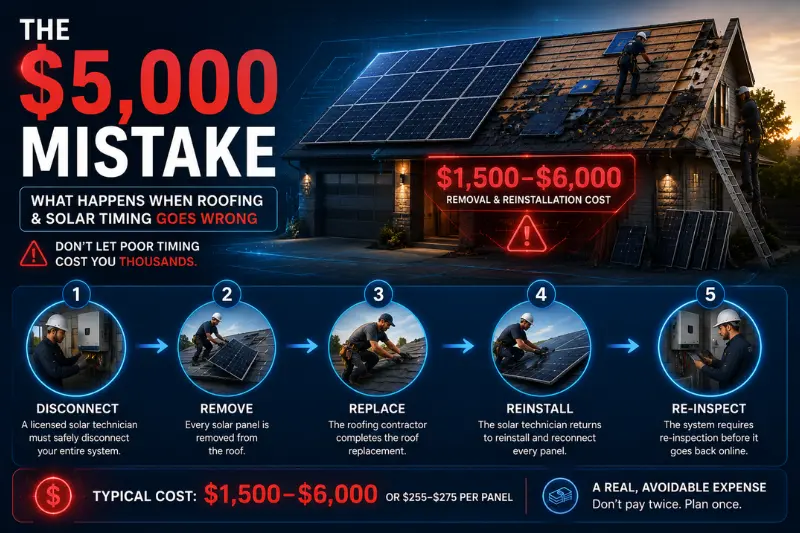
This is the section most competitor articles bury or skip entirely — and it is the most important thing you will read in this guide.
If you install solar on a roof that is already approaching the end of its life, here is what happens when that roof eventually needs replacement:
- A licensed solar technician must safely disconnect your entire system
- Every panel is removed from the roof
- The roofing contractor completes the replacement
- The solar technician returns to reinstall and reconnect every panel
- The system requires re-inspection before it goes back online
The cost of this process: Removal and reinstallation typically runs $1,500–$6,000 for a residential system, or roughly $255–$275 per panel. For a typical 20-panel system, that is a real, avoidable expense of $5,000 or more — on top of your roof replacement cost.
This is the core reason roofing and solar need to be planned together from day one.
The Roof Age Rule of Thumb
So how do you know if your roof is ready for solar — or if you should handle roofing and solar together? Use this practical framework:
Roof is under 10 years old, no visible damage: You are in good shape. Proceed with solar installation. Your shingles and panels have similar remaining lifespans and can age out together.
Roof is 10–15 years old: Get a professional roof inspection before installing solar. If the inspector confirms 15+ years of remaining life, you can proceed. If not, replacing your roof as part of your roofing and solar project is the smarter financial move.
Roof is 15+ years old, or showing wear: Plan to replace your roof before or alongside your solar installation. Warning signs include curling shingles, granule loss collecting in your gutters, sagging sections, or water stains on your ceiling.
Roof is over 20 years old: Replace your roof first. At this age, the math almost always favors bundling roofing and solar into one coordinated project rather than risking a costly removal and reinstallation within a few years of going solar.
Warning Signs Your Roof Is Not Ready for Solar
Beyond age alone, watch for these red flags before any roofing and solar project begins:
- Missing, curling, or cracked shingles — visible from the ground or a quick roof walk
- Granule loss — check your gutters for accumulated shingle granules, a sign of advanced wear
- Sagging areas — particularly near chimneys, skylights, and roof valleys
- Interior clues — light coming through your attic, water stains, or wood discoloration on rafters
- Widely spaced rafters — older homes may need additional structural support before solar panels can be safely mounted
Any of these signs means a professional roof inspection should happen before — not after — your solar installation.
How to Coordinate Roofing and Solar Projects
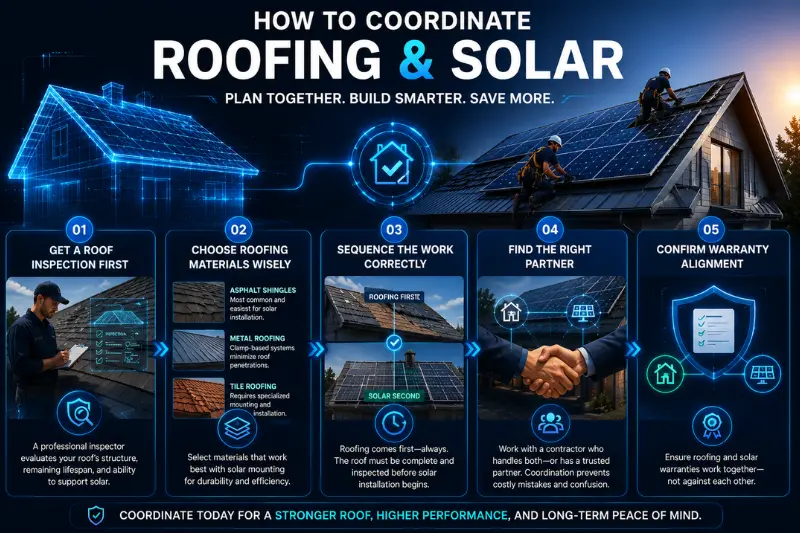
Whether you are doing both at once or planning ahead for the future, here is how to manage roofing and solar together successfully:
Step 1: Get a roof inspection first. This is the foundation of every roofing and solar decision. A professional inspector evaluates your roof’s structure, remaining lifespan, and ability to support the additional weight and attachment points of a solar array.
Step 2: Choose roofing materials with solar in mind. Not all roofing materials work the same way with solar mounting hardware. Asphalt shingles are the most common and generally the most straightforward for solar installation. Metal roofing can actually simplify solar mounting with clamp-based systems that do not require roof penetrations at all. Tile roofing requires specialized mounting hardware and more careful installation.
Step 3: Sequence the work correctly. If both projects are happening, roofing comes first — always. The roof must be complete, inspected, and ready before solar installation begins. Trying to work around existing panels during a roof replacement adds unnecessary cost and risk.
Step 4: Find a contractor who handles both — or has a trusted partner. Some companies offer combined roofing and solar services directly. If your roofer does not offer solar, ask if they have an established working relationship with a local solar installer. Coordination between the two trades prevents miscommunication about flashing, penetrations, and warranty responsibilities.
Step 5: Confirm warranty alignment. Your roofing warranty and your solar installation warranty need to work together — not against each other. Ask specifically what happens to your roofing warranty if solar penetrations are added, and what happens to your solar warranty if roofing work is performed around the array later.
Roofing and Solar Costs: What to Expect
New roof installation: $8,000–$20,000+ depending on roof size, materials, and your location
Residential solar system (6–8 kW): $15,000–$28,000 before incentives
Bundling roofing and solar together: Typically saves $3,000–$5,000 compared to doing both projects separately — primarily by avoiding duplicate labor, scaffolding, and site setup costs
Cost of removal and reinstallation later (if roof fails first): $1,500–$6,000, or roughly $255–$275 per panel
The math is straightforward: a small amount of upfront coordination between roofing and solar saves significant money over the life of both systems.
Best Roofing Materials for Solar Installation
Asphalt Shingles The most common roofing material in the United States and the most straightforward for solar mounting. Asphalt shingles and solar panels have roughly similar lifespans, making this a natural pairing for roofing and solar projects.
Metal Roofing An excellent long-term option. Standing seam metal roofs allow for clamp-based solar mounting systems that attach to the seams without any roof penetrations at all — reducing leak risk and simplifying future panel removal if ever needed. Metal roofs also typically last 40–70 years, far outlasting a single generation of solar panels.
Tile Roofing Common in warmer climates. Tile requires specialized mounting hardware (tile hooks or tile replacement mounts) and more careful installation to avoid cracking tiles. Tile roofs are durable but make roofing and solar coordination especially important due to the specialized work involved.
Flat or Low-Slope Roofs Common on additions, garages, and some home styles. These typically use ballasted mounting systems (weighted racks that do not penetrate the roof) or specialized low-profile penetration mounts.
Ground-Mounted Solar: An Alternative Worth Considering
If your roof is not a good candidate for solar — due to age, shading, orientation, or structural limitations — ground-mounted solar panels are a legitimate alternative that sidesteps the roofing and solar timing issue entirely.
Advantages of ground-mounted systems:
- No dependency on your roof’s age or condition
- Easier access for cleaning, inspection, and maintenance
- Can often be angled for optimal sun exposure regardless of roof orientation
- No roof penetrations or warranty concerns
Considerations:
- Requires available yard space
- May need additional permitting depending on local zoning
- Slightly higher installation cost per panel due to additional mounting structure
For homeowners with an aging roof who are not ready for a full roof replacement, ground-mounted solar can be a smart way to start generating savings now without the roofing and solar timing pressure.
Should I replace my roof before installing solar panels?
If your roof has less than 15 years of remaining life, yes. The rule of thumb is straightforward: if your roof is over 10 years old, get a professional inspection before going solar. If the inspector confirms less than 15 years remaining, replacing your roof as part of your roofing and solar project avoids a costly removal and reinstallation later.
How much does it cost to remove and reinstall solar panels for a roof replacement?
Removal and reinstallation typically costs $1,500–$6,000 for a residential system, or roughly $255–$275 per panel. For a 20-panel system, this adds up to $5,000 or more — an expense that proper roofing and solar timing avoids entirely.
Can I install solar panels on any type of roof?
Most roofing materials can support solar panels, but some are better suited than others. Asphalt shingles and metal roofing are generally the easiest and most cost-effective for solar mounting. Tile roofs require specialized hardware. Flat roofs use ballasted or low-profile mounting systems.
Does bundling roofing and solar together save money?
Yes. Bundling typically saves $3,000–$5,000 compared to doing both projects separately, primarily by avoiding duplicate labor, equipment setup, and site access costs. The bigger savings comes from avoiding a future removal and reinstallation entirely.
What roofing material lasts the longest with solar panels?
Metal roofing, particularly standing seam metal, typically lasts 40–70 years — far longer than the 25–30 year lifespan of solar panels. This makes metal roofing an excellent long-term pairing for roofing and solar projects, especially since clamp-based mounting avoids roof penetrations entirely.
What if my roofer does not offer solar services?
Many roofing contractors do not install solar directly but have established relationships with local solar installers. Ask your roofer if they have a trusted solar partner — coordination between the two trades is essential for proper flashing, sequencing, and warranty alignment.
Is ground-mounted solar a good alternative if my roof is not ready?
Yes. Ground-mounted solar systems avoid the roofing and solar timing issue entirely since they do not depend on your roof’s condition or remaining lifespan. They require available yard space but offer easier access for maintenance and can often be optimally angled regardless of your roof’s orientation.
What warranty issues should I consider with roofing and solar?
Confirm with both your roofing contractor and solar installer how their warranties interact. Ask specifically what happens to your roofing warranty when solar mounting hardware penetrates the roof, and what happens to your solar warranty if roofing work is performed around the array in the future. Get both answers in writing before any work begins.
Final Thoughts
Roofing and solar are not two separate projects — they are two halves of the same long-term investment in your home. The roof underneath your panels determines how well, how safely, and how cost-effectively your solar system performs over its entire lifespan.
Before you go solar, get your roof inspected. Know its age and remaining lifespan. Choose materials and contractors who understand how roofing and solar work together. A little planning now means decades of clean energy without an expensive, avoidable surprise down the road.