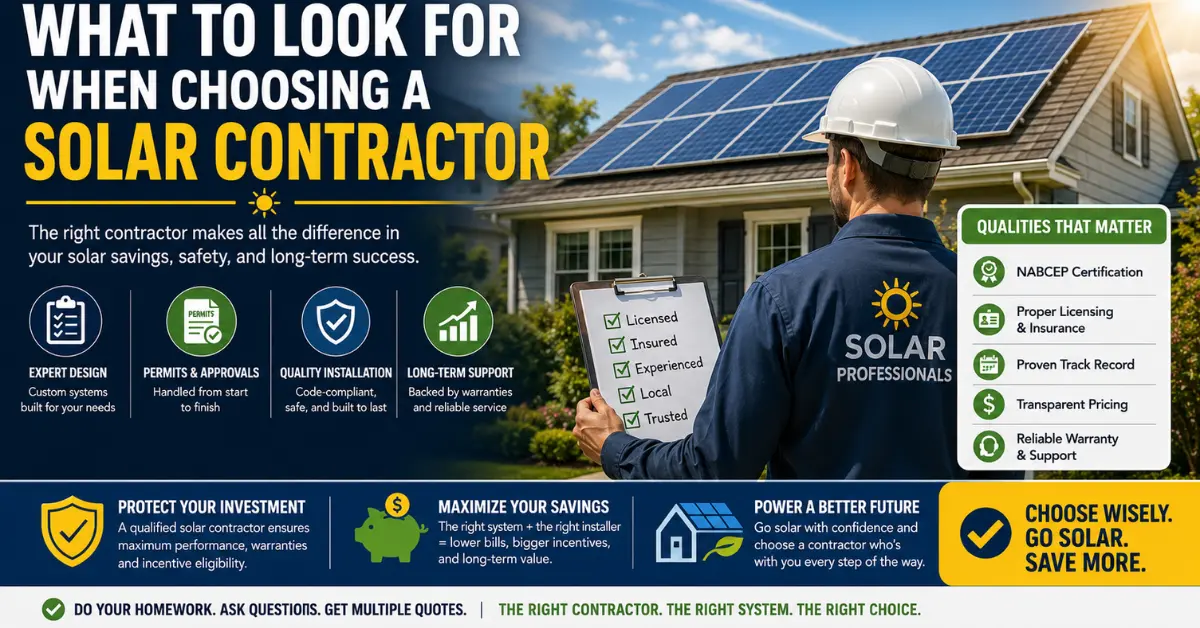
Energy bills are climbing, and the search for smarter, long-term solutions has never been more urgent. Solar energy has moved from a niche option to a mainstream choice for millions of homeowners and businesses across the country. But here’s the truth most people miss: the quality of your solar system depends far less on the panels themselves and far more on the contractor who installs them. Choosing the right solar contractor is the single most important decision in your entire solar journey.
A great solar contractor does much more than mount panels on your roof. They assess your property, design a system built around your actual energy needs, handle every permit and inspection, coordinate with your utility company, and stand behind their work long after installation day. A poor contractor, on the other hand, can leave you with a system that underperforms, voids your warranties, disqualifies you from valuable tax incentives, or fails a safety inspection. The difference between the two can cost you thousands of dollars.
This guide is built to help you make the right call. Whether you’re a homeowner looking to cut your electricity bill or a business owner ready to reduce operational costs, you’ll find everything you need here — from spotting red flags and verifying credentials to understanding costs, incentives, and financing. By the end, you’ll know exactly what to look for in a solar contractor and how to hire with confidence.
What Is a Solar Contractor?
A solar contractor is a licensed professional who designs, installs, and commissions solar energy systems for homes and businesses. Unlike a general electrician or handyman, a qualified solar contractor brings together expertise in:
- Solar panel system design and engineering
- Electrical work and grid interconnection
- Local permitting and building code compliance
- Utility company coordination and net metering setup
- System commissioning and performance monitoring
Think of a solar contractor as your full-service guide from the first site visit all the way to the day your system generates its first kilowatt-hour of clean energy.
DIY vs. Hiring a Solar Contractor: Which Is Right for You?
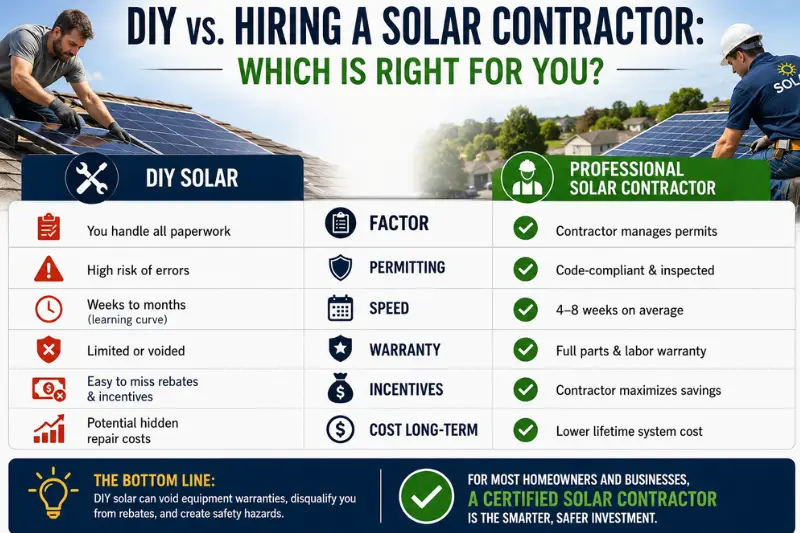
Some homeowners consider DIY solar to cut costs. Before you go that route, it’s worth understanding exactly what you’d be taking on. Here’s an honest comparison:
| Factor | DIY Solar | Professional Solar Contractor |
| Permitting | You handle all paperwork | Contractor manages permits |
| Safety | High risk of errors | Code-compliant & inspected |
| Speed | Weeks to months (learning curve) | 4–8 weeks on average |
| Warranty | Limited or voided | Full parts & labor warranty |
| Incentives | Easy to miss rebates | Contractor maximizes savings |
| Cost Long-Term | Potential hidden repair costs | Lower lifetime system cost |
The bottom line: DIY solar can void equipment warranties, disqualify you from rebates, and create safety hazards. For most homeowners and businesses, a certified solar contractor is the smarter, safer investment.
5 Qualities Every Great Solar Contractor Should Have
Not all solar contractors are equal. Here’s what separates the best from the rest:
1. NABCEP Certification
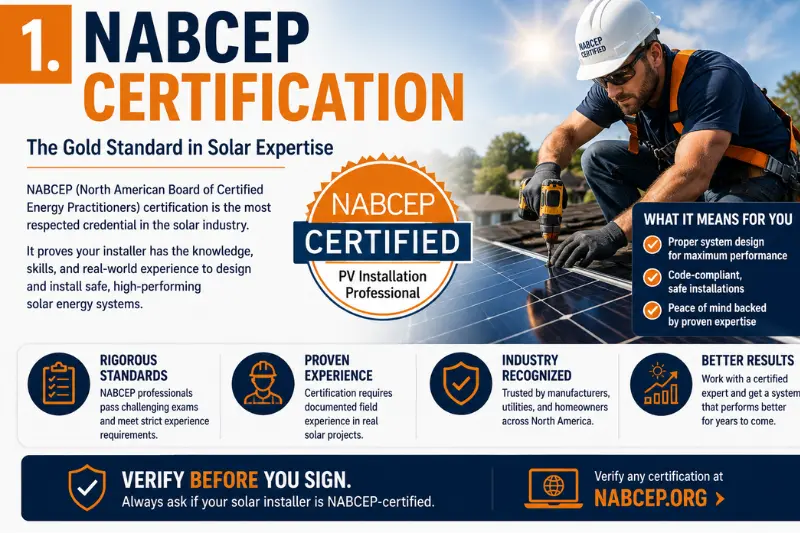
The North American Board of Certified Energy Practitioners (NABCEP) is the gold standard for solar certification. A NABCEP-certified installer has passed rigorous exams and demonstrated real-world competency. Always verify this before signing anything.
2. State Licensing and Insurance
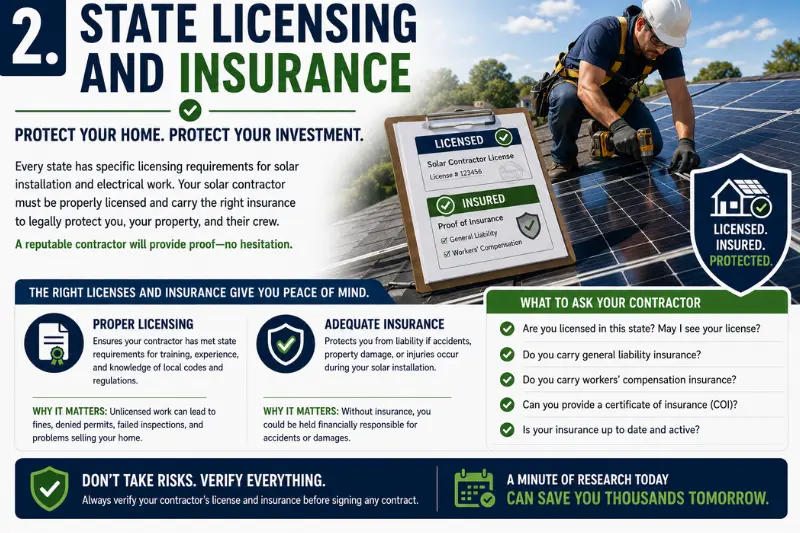
Every state has different licensing requirements for solar and electrical work. Your contractor must hold the right licenses in your state and carry general liability insurance plus workers’ compensation. Ask for proof — a trustworthy contractor will provide it without hesitation.
3. Verifiable Project Portfolio
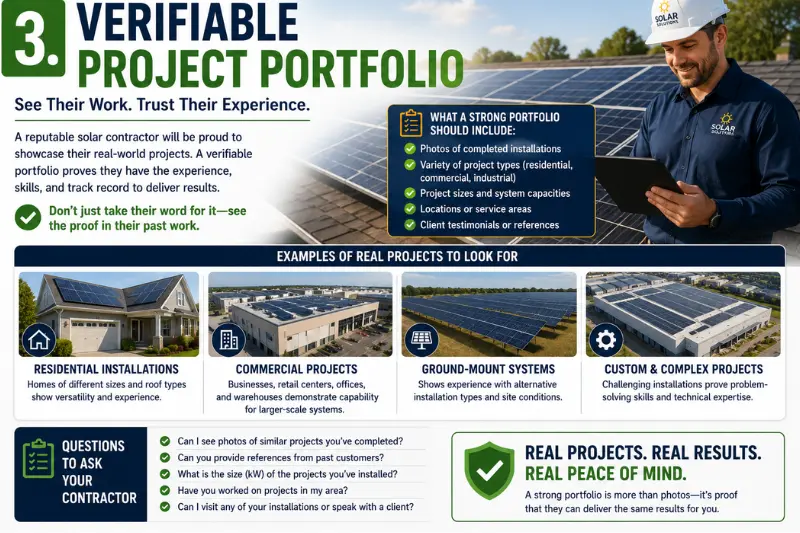
Ask to see photos of completed installations. The best contractors can point to named real-world projects — commercial buildings, schools, hospitals — not just stock images on a website.
4. Transparent, Itemized Quotes
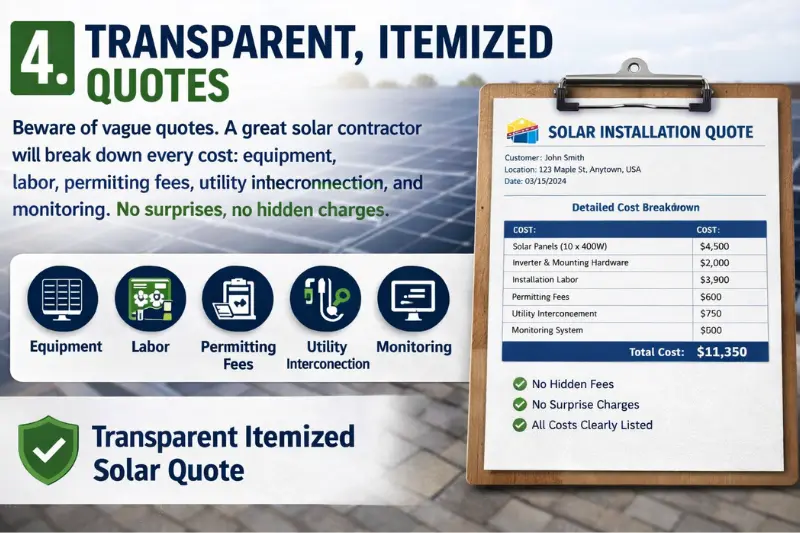
Beware of vague quotes. A great solar contractor will break down every cost: equipment, labor, permitting fees, utility interconnection, and monitoring. No surprises, no hidden charges.
5. Strong Manufacturer Relationships
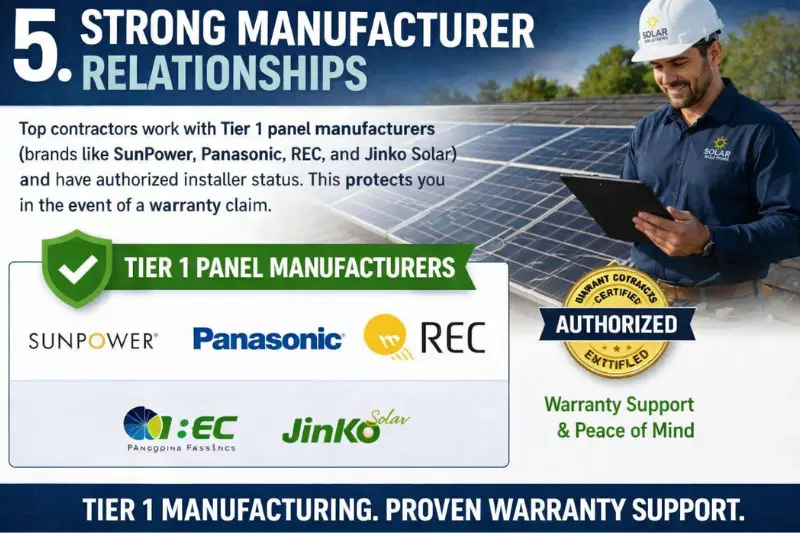
Top contractors work with Tier 1 panel manufacturers (brands like SunPower, Panasonic, REC, and Jinko Solar) and have authorized installer status. This protects you in the event of a warranty claim.
How to Find a Qualified Solar Contractor Near You
Finding the right contractor doesn’t have to be overwhelming. Use these proven steps:
- Search the NABCEP Certified Professional Directory at nabcep.org
- Check the SEIA (Solar Energy Industries Association) member database
- Read reviews on Google, Yelp, and the Better Business Bureau
- Ask your utility company for a list of approved solar installers
- Get at least 3 quotes before making a final decision
- Ask neighbors, friends, or local community groups for referrals
Pro tip: Local contractors often outperform national chains on customer service and response times. They also have deeper knowledge of local permitting processes and utility requirements.
Red Flags to Watch Out For
The solar industry, like any fast-growing market, attracts a few bad actors. Protect yourself by watching for these warning signs:
- High-pressure sales tactics or time-limited offers designed to rush your decision
- Requests for large upfront payments before work begins
- No physical business address or local presence
- Vague or verbal-only warranties — get everything in writing
- Unlicensed or uninsured crews
- Unusually low quotes (often a sign of inferior equipment or cut corners)
- Promises of 100% energy offset with no data to back it up
If something feels off, trust your instincts. Take your time. A reputable solar contractor will never pressure you.
Understanding Solar Incentives and Tax Credits
One of the most powerful reasons to go solar right now is the financial incentive landscape. Here’s a clear breakdown:
Federal Investment Tax Credit (ITC)
The federal ITC currently offers a 30% tax credit on the full cost of your solar system, including installation and battery backup. This credit applies directly to what you owe in federal income taxes. It is available to both homeowners and businesses.
State-Level Incentives
Many states offer additional benefits beyond the federal credit, including:
- State income tax credits (varies by state)
- Sales tax exemptions on solar equipment
- Property tax exemptions (your home’s value increases, but your property tax bill does not)
- Net metering programs that credit you for excess energy sent back to the grid
Important: Your solar contractor should help you identify every incentive you qualify for. If they don’t bring this up proactively, that’s a red flag.
Utility Rebates
Some local utility companies offer additional rebates for solar installations. These can reduce your upfront cost by hundreds or even thousands of dollars. Ask your contractor and your utility provider what’s available in your area.
Solar Financing: What Are Your Options?
Going solar doesn’t have to mean paying everything upfront. Here are the most common financing options:
- Cash Purchase: The highest upfront cost but the best long-term savings and full ownership of the system.
- Solar Loan: Finance your system with a home improvement or solar-specific loan. You own the system and keep all tax credits.
- Solar Lease: Pay a fixed monthly fee to use the system. Lower upfront cost, but the installer owns the system and you don’t receive the ITC.
- Power Purchase Agreement (PPA): Pay only for the electricity your system produces, usually at a rate below your utility rate. The installer owns the system.
Ask your solar contractor to walk you through each option and model the long-term financial outcome of each. A good contractor will put your financial interests first.
The Solar Installation Process: Step by Step
Wondering what to expect after you sign a contract? Here’s a typical timeline:
Step 1 — Site Assessment (Week 1)
Your contractor visits your property to assess roof condition, shading, orientation, and your energy usage. They’ll pull your utility bills to size the system correctly.
Step 2 — Custom System Design (Week 1–2)
Engineers design a system tailored to your roof and energy needs. You’ll receive a detailed proposal including system size, projected output, estimated savings, and payback period.
Step 3 — Permitting (Week 2–4)
Your contractor submits permit applications to your local municipality and, in many cases, to your utility company for interconnection approval. This is often the longest part of the process.
Step 4 — Installation (1–3 Days)
Panels are mounted, wiring is run, the inverter is installed, and everything is connected to your electrical panel. Most residential installations take just one to two days.
Step 5 — Inspection and Utility Sign-Off (Week 5–7)
A local building inspector visits to confirm the installation meets code. Your utility company then approves the grid connection.
Step 6 — System Activation (Week 6–8)
Your system is turned on and begins generating power. Your contractor walks you through the monitoring app so you can track production in real time.
What to Expect After Installation
A great solar contractor doesn’t disappear after your system is activated. Expect these post-installation services from a quality provider:
- System performance monitoring (24/7 dashboard access)
- Annual maintenance check-ups and panel cleaning guidance
- Rapid response for any system alerts or outages
- Support for future upgrades like battery backup or EV charger installation
- Documentation for warranty claims if needed
Ask your contractor directly: ‘What happens if I have a problem two years from now?’ The answer tells you a lot about who they really are.
Commercial Solar: What Businesses Need to Know
For business owners, a solar contractor brings additional value beyond just energy savings:
- Scalable systems designed around your operational load profiles
- Accelerated depreciation under the Modified Accelerated Cost Recovery System (MACRS), which lets businesses depreciate solar assets over 5 years
- ESG reporting benefits — solar reduces Scope 2 carbon emissions
- On-site battery storage to protect against grid outages and demand charges
- EV charging infrastructure for company fleets or customer parking
When evaluating commercial solar contractors, ask about their experience with systems over 100 kW and whether they have worked with industrial or multi-site installations.
Your Solar Contractor Hiring Checklist
Before you sign any contract, confirm all of the following:
- Contractor holds NABCEP certification
- Valid state contractor’s license provided
- Proof of general liability and workers’ comp insurance
- Itemized written quote received
- Permit and interconnection handled by contractor
- Equipment brand and model specified in contract
- Warranty terms clearly documented (panels, inverter, labor)
- References or portfolio of past projects shared
- All applicable incentives identified and claimed
- Post-installation monitoring and support plan confirmed
Frequently Asked Questions
How much does it cost to hire a solar contractor?
The average residential solar installation in the U.S. costs between $15,000 and $30,000 before incentives. After applying the 30% federal ITC and any state rebates, many homeowners pay $10,000 to $21,000. Commercial projects vary widely based on system size and site complexity.
How long does a solar installation take from start to finish?
Most residential projects take 4 to 8 weeks from contract signing to activation. The longest part is usually waiting for permits and utility interconnection approval — the actual physical installation often takes just 1 to 2 days.
What certifications should a solar contractor have?
At a minimum, look for NABCEP certification and a valid state electrical or contractor’s license. Additional certifications from equipment manufacturers (like SunPower Dealer or Tesla Powerwall Certified) are a bonus.
Will my solar panels work during a power outage?
Standard grid-tied solar systems shut off during outages for safety reasons. If you want backup power, you’ll need a battery storage system (like a Tesla Powerwall or Enphase IQ Battery). Ask your solar contractor about adding storage to your system.
How do I know if my roof is suitable for solar?
Most roofs are suitable, but your contractor will assess the angle, orientation (south-facing is ideal), shading from trees or buildings, and roof age. If your roof needs replacement within 5 years, do it before installing solar panels.
Can I add battery storage or EV charging to my solar system?
Yes. Many solar contractors offer integrated energy solutions that include battery backup and EV charger installation. Adding these at the time of your solar installation is often more cost-effective than doing them separately later.
What happens if my solar contractor goes out of business?
Panel and inverter warranties are backed by the manufacturer, not the installer. Labor warranties, however, are contractor-specific. To protect yourself, choose an established company with a strong track record, and ask about their warranty transfer policy.
Final Thoughts: Choose Your Solar Contractor Wisely
Going solar is a 25-to-30-year decision. The panels may sit on your roof for decades — which means the contractor who installs them will have a long-lasting impact on your home’s energy performance, property value, and peace of mind.
Do your homework. Verify credentials. Get multiple quotes. Ask hard questions. A solar contractor who genuinely has your interests at heart will welcome every one of them.
When you’re ready to move forward, look for a contractor who is certified, experienced, transparent, and local. Those four qualities, more than anything else, separate a great solar contractor from an average one.