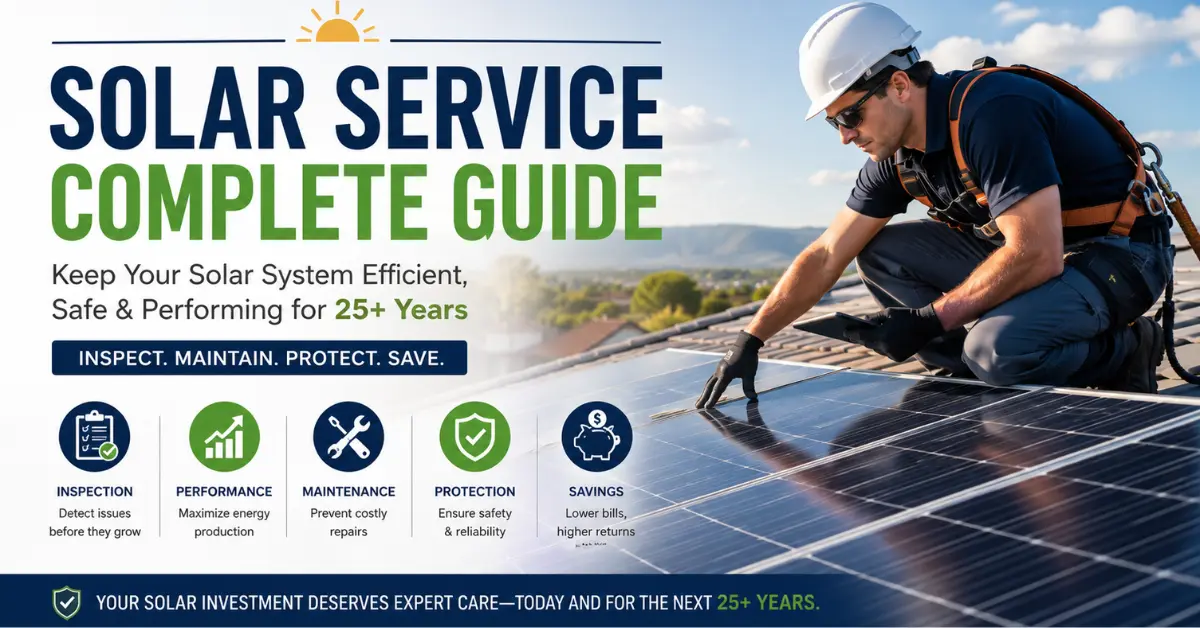
You spent thousands of dollars on your solar system. The panels are installed, the inverter is humming, and your electricity bills are finally dropping. But here’s the part most solar companies never tell you: buying solar is only half the job. The other half — the part that actually protects your investment — is the ongoing service and maintenance you commit to after installation day.
Solar panels are tough, but they’re not invincible. Dust accumulates, wiring loosens, inverters age silently, and birds nest under your array. A single cracked panel or failing connection can cost you weeks of lost energy production — and most homeowners never notice until the damage shows up on their electricity bill, by which point it has already been quietly draining their savings for months.
This guide gives you everything you need to know about solar service: what it includes, how often you need it, what it realistically costs, red flags to watch for, and how to find a certified provider you can actually trust. Whether you have a small home system or a large commercial array, the information here will help you keep your solar investment running strong for 25 years and beyond.
What Is Solar Service?
Solar service refers to the full range of professional care activities that keep your solar energy system safe, efficient, and productive. It goes beyond simply cleaning panels — a common misconception. True solar service covers:
- System inspections (panels, inverters, wiring, mounting hardware)
- Performance monitoring and data analysis
- Preventive maintenance to catch problems before they grow
- Electrical testing, voltage checks, and connection audits
- Component repairs or replacements (inverters, batteries, racking)
- Weather and environmental damage assessments
- Battery and storage system diagnostics
- Re-roofing support (panel removal and reinstallation)
- Warranty work coordination with manufacturers
- Grid compliance and utility billing reviews
Think of solar service the same way you think about servicing your car. You wouldn’t skip oil changes and expect the engine to last 25 years. Your solar system deserves the same proactive care.
Why Solar Service Matters More Than You Think
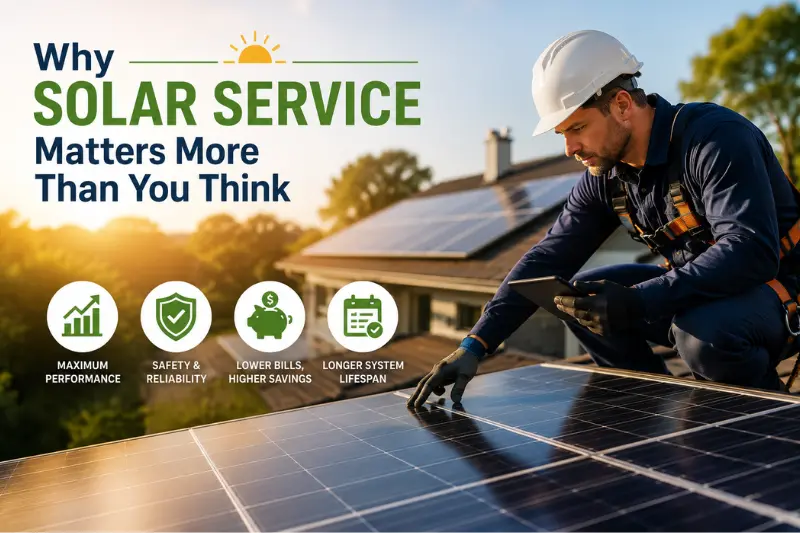
Solar panels are often marketed as “maintenance-free” — and while they require less upkeep than most appliances, they are not zero-maintenance. Here’s what’s actually at stake:
1. Energy Production Loss
A dirty or damaged panel can lose 10–25% of its output. Over months and years, that translates directly into higher electricity bills and a lower return on your investment.
2. Inverter Failures Go Unnoticed
Your inverter is the brain of your solar system. If it fails quietly — which they often do — your panels may still look fine while generating zero electricity. Without active monitoring or regular service, you might not notice for weeks or months.
3. Voided Warranties
Most panel and inverter manufacturers require documented maintenance to keep warranties valid. Skipping scheduled service visits could leave you fully responsible for a $3,000+ inverter replacement.
4. Safety Hazards
Loose wiring, corroded connections, and improperly mounted panels can create serious fire or electrocution risks. These issues are invisible to the untrained eye but detectable during a professional inspection.
5. Long-Term Savings Protection
Solar systems are built to last 25–30 years. Regular service ensures yours reaches that lifespan — and continues producing at 80% or more of its original capacity by year 20.
What Does a Solar Service Visit Include?
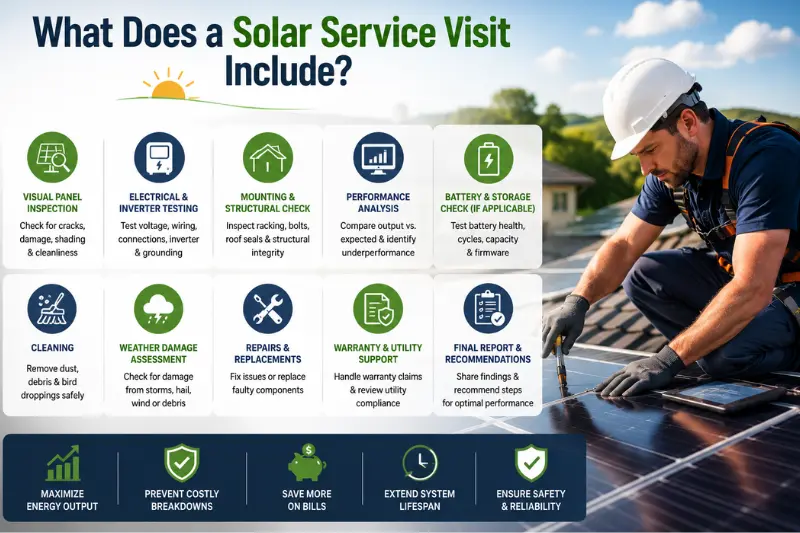
A professional solar service visit typically covers all of the following. Ask your provider to confirm these are included before you book.
Visual Panel Inspection
- Check for cracks, chips, discoloration, or hot spots
- Look for shading from new tree growth or nearby structures
- Assess panel cleanliness and soiling levels
Electrical and Inverter Testing
- Measure voltage and current output at each string
- Test inverter performance and error logs
- Inspect all DC and AC wiring connections for corrosion or looseness
- Verify grounding systems are intact
Mounting and Structural Check
- Inspect racking hardware for rust, loosening bolts, or shifting
- Confirm roof penetrations are properly sealed and watertight
- Look for uplift or wind damage on brackets and flashings
Performance Analysis
- Compare actual output to expected output for your location and season
- Review monitoring data for drops, outages, or inconsistencies
- Identify underperforming panels or strings
Battery and Storage System Check (if applicable)
- Test battery state of health and capacity
- Review charge/discharge cycles
- Update firmware if needed
- Check cooling or ventilation systems
Cleaning
- Remove dust, bird droppings, pollen, and debris
- Use deionized or soft water to prevent mineral streaking
- Avoid abrasive tools that scratch panel glass
Pro Tip: In areas with hard water, always use deionized water for panel cleaning. Tap water can leave mineral deposits that reduce efficiency almost as much as the dirt you just removed.
How Often Do You Need Solar Service?
The right service schedule depends on your location, system size, and environment. Here’s a practical guide:
| Service Type | Recommended Frequency | Notes |
| Panel Cleaning | Every 6–12 months | More often in dusty, arid, or high-pollen areas |
| Full System Inspection | Once a year | Twice yearly for commercial systems |
| Performance Review | Monthly (automated) | Use monitoring software or app |
| Inverter Check | Every 1–2 years | Inverters typically last 10–15 years |
| Battery Health Check | Every 6 months | Especially critical for off-grid systems |
| Post-Storm Inspection | After any severe weather | Hail, high winds, flooding |
| Re-roofing Support | As needed | Coordinate with roofer in advance |
Solar Service for Residential vs. Commercial Systems
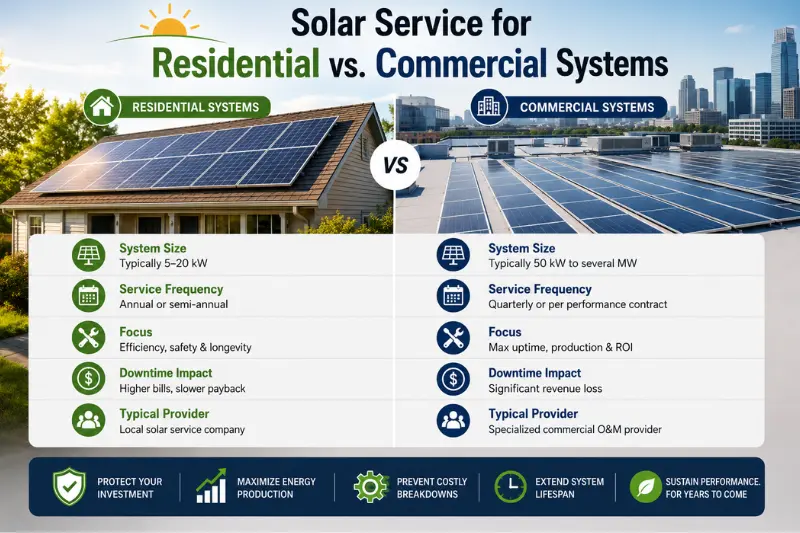
The fundamentals are the same, but the scale and complexity differ significantly.
Residential Solar Service
- Systems typically range from 5–20 kW
- Annual or semi-annual inspections are usually sufficient
- Basic cleaning is sometimes DIY-friendly (single-story, easily accessible roofs)
- Monitoring apps let homeowners track performance daily
- Focus areas: roof integrity, panel soiling, inverter health
Commercial Solar Service
- Systems can range from 50 kW to several megawatts
- Often require 24/7 monitoring with automated alert systems
- Grid integration adds complexity: power purchase agreements, net metering compliance
- Quarterly or monthly inspections may be required under financing agreements
- Thermographic (infrared) imaging used to detect hot spots invisible to the naked eye
- Drone inspections increasingly used for large rooftop and ground-mount arrays
- Service contracts often tied to production guarantees
How Much Does Solar Service Cost?
One of the most common questions — and one competitors rarely answer directly. Here are realistic cost ranges for the U.S. market:
| Service | Typical Cost | What’s Included |
| Panel Cleaning (Residential) | $150–$350 | Cleaning 15–30 panels, debris removal |
| Annual Inspection (Residential) | $150–$300 | Visual, electrical, and performance check |
| Full O&M Contract (Residential) | $200–$600/year | Cleaning + inspection + monitoring |
| Commercial Inspection | $500–$2,000+ | Depends on system size and complexity |
| Inverter Replacement | $1,000–$3,500 | Parts + labor; varies by brand/size |
| Battery System Service | $100–$400/visit | Health check, firmware, calibration |
| Post-Storm Inspection | $100–$250 | Emergency dispatch, damage assessment |
| Panel Replacement (each) | $200–$600 | Parts + labor; varies by brand |
Note: Costs vary significantly by region, roof accessibility, and system complexity. Always get at least two quotes before booking service.
DIY Solar Maintenance vs. Professional Solar Service
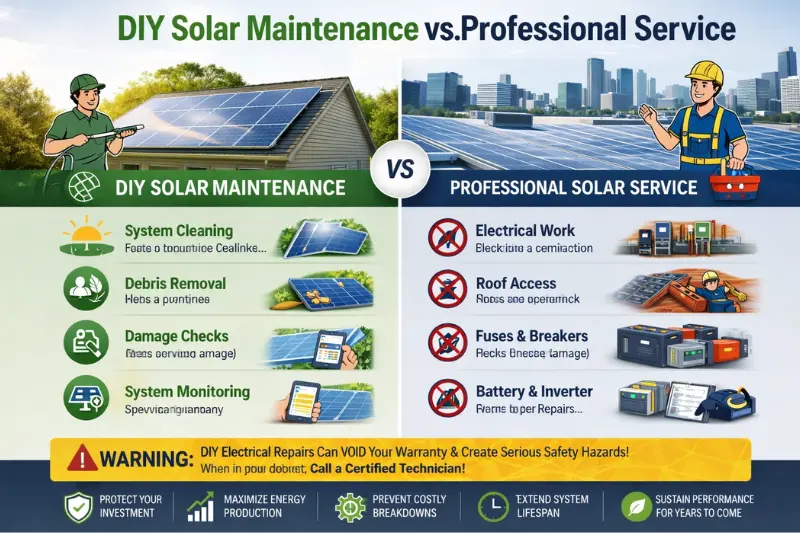
You can handle some maintenance tasks yourself — but know the limits.
What You CAN Do Yourself
- Rinse panels with a garden hose (ground-floor accessible systems)
- Use a soft brush or squeegee with distilled water for surface grime
- Monitor your system output through a manufacturer app or web portal
- Check for obvious physical damage after storms
- Clear debris like leaves or branches resting on the array
What You Should NEVER DIY
- Any electrical connections, wiring, or inverter work
- Accessing rooftop panels without proper fall protection equipment
- Testing or replacing fuses, breakers, or combiner boxes
- Battery system diagnostics or cell replacements
- Warranty-related repairs (always use a certified technician)
Warning: Attempting DIY electrical repairs on your solar system can void your warranty, violate local codes, and create serious safety hazards. When in doubt, call a certified technician.
Signs You Need Solar Service Right Now
Don’t wait for your annual visit if you notice any of the following:
- Your electricity bill is suddenly higher with no change in usage
- Your monitoring app shows output 15% or more below historical averages
- Your inverter display shows an error code or warning light
- You hear unusual buzzing or clicking sounds near your inverter
- You see visible cracks, discoloration, or burn marks on any panels
- Your system stopped producing power entirely
- After a major storm, hail event, or nearby fire
- Your battery backup no longer holds a full charge
How to Choose a Solar Service Provider
Not all solar service companies are created equal. Here’s how to find one worth trusting:
Credentials to Look For
- NABCEP (North American Board of Certified Energy Practitioners) certification — the gold standard in the U.S.
- Licensed electricians on staff (not just subcontractors)
- Manufacturer-authorized service for your brand of panels, inverters, or batteries
- Insurance: general liability and workers’ compensation
Questions to Ask Before Hiring
- What specific services are included in your maintenance plan?
- Are your technicians NABCEP-certified or licensed electricians?
- Do you provide a written report after each service visit?
- How quickly can you respond to an emergency repair call?
- Do you offer performance guarantees or production warranties?
- Are you authorized to perform warranty work with my equipment brand?
- What monitoring tools do you use, and will I have access to them?
- Can you provide references from residential or commercial clients similar to mine?
Red Flags to Avoid
- No written service contract or vague scope of work
- Extremely low prices with no explanation of what’s included
- No verifiable certifications or licensing
- Technicians who can’t explain your monitoring data
- No experience with your specific inverter or battery brand
- Companies that only sell equipment but don’t service it
Understanding Your Solar Monitoring System
This is something most competitors skip entirely — but it’s one of the most powerful tools for keeping your system healthy.
Modern solar systems come with built-in monitoring platforms that track your production in real time. Here’s how to use them effectively:
What to Monitor
- Daily, monthly, and annual kWh production
- Comparison against your system’s expected output for your location
- Individual panel or string performance (on systems with panel-level monitoring)
- Inverter operating status and error history
- Battery charge level and cycle count (if you have storage)
Popular Monitoring Platforms
- SolarEdge — panel-level monitoring with detailed string analysis
- Enphase Enlighten — per-microinverter monitoring, excellent for residential
- SMA Sunny Portal — widely used for both residential and commercial
- Fronius Solar.web — reliable monitoring with weather data integration
- Tesla/SolarCity app — integrated with Powerwall battery systems
Even if your system feels like it’s working fine, log into your monitoring platform monthly. A 10% production drop might be invisible on your electricity bill but very visible in your data — and worth fixing before it costs you more.
Solar Service After Severe Weather
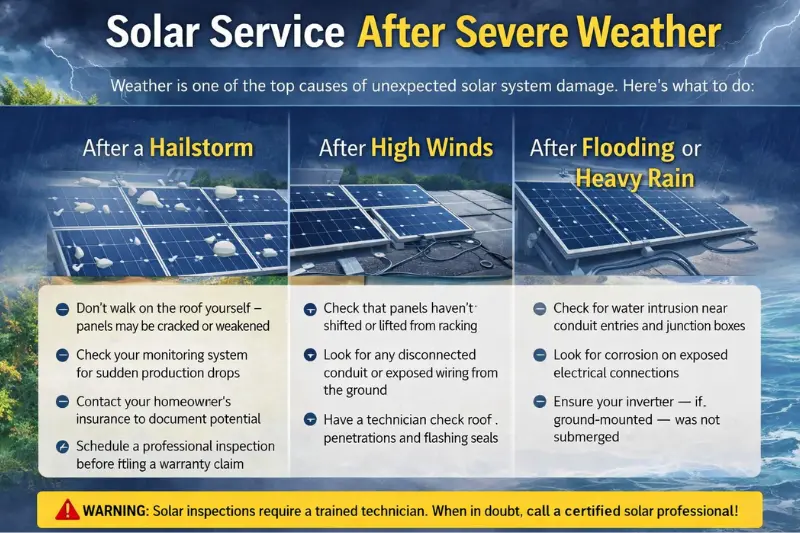
This is another area competitors rarely cover in detail. Weather is one of the top causes of unexpected solar system damage. Here’s what to do:
After a Hailstorm
- Don’t walk on the roof yourself — panels may be cracked or weakened
- Check your monitoring system for sudden production drops
- Contact your homeowner’s insurance to document potential damage
- Schedule a professional inspection before filing a warranty claim
After High Winds
- Check that panels haven’t shifted or lifted from racking
- Look for any disconnected conduit or exposed wiring from the ground
- Have a technician check roof penetrations and flashing seals
After Flooding or Heavy Rain
- Check for water intrusion near conduit entries and junction boxes
- Look for corrosion on exposed electrical connections
- Ensure your inverter — if ground-mounted — was not submerged
Solar Service and Your Roof: What You Need to Know
If you need a new roof, your solar panels must come down first — and go back up properly. This is a service most homeowners don’t think about until it’s urgent.
- Always use your solar service provider — not just your roofer — to handle panel removal and reinstallation
- Improper reinstallation can void equipment warranties
- Your insurance company typically covers removal and reinstallation if the roof claim is covered — ask your provider
- Plan ahead: scheduling can take 1–3 weeks, so don’t wait until the last minute
- After reinstallation, a full system inspection and performance test should always be performed
Common Solar Service Mistakes to Avoid
Learn from what goes wrong most often:
- Waiting until something breaks instead of scheduling preventive visits
- Hiring a general handyman instead of a certified solar technician
- Not keeping service records (you’ll need them for warranty claims)
- Ignoring monitoring alerts or unexplained production drops
- Using the wrong cleaning products — bleach, pressure washers, or abrasive pads damage panels
- Not confirming your technician is authorized to perform warranty work
- Assuming “no news is good news” when you haven’t checked your system in months
FAQs About Solar Service
How long does a solar service visit take?
A standard residential service visit takes 1–3 hours. Larger commercial systems may take a full day or require multiple visits.
Can I use any solar service company, or does it need to be my installer?
You can use any certified provider — you are not locked into your original installer. Just make sure the new provider is qualified to work on your specific equipment brands and can perform warranty-eligible repairs.
Does homeowner’s insurance cover solar service?
Routine maintenance is not covered by insurance. However, damage from storms, fire, or falling objects typically is covered — subject to your deductible and policy terms. Always document damage with photos and professional inspection reports.
What happens if I never service my solar system?
Performance will gradually decline. More critically, small issues — loose wiring, failing inverters, cracked panels — can go undetected, leading to larger failures, voided warranties, and potential safety hazards.
Is solar service different for off-grid systems?
Yes. Off-grid systems have more components to maintain, especially the battery bank. Battery health is critical for off-grid reliability, and specialized technicians with lithium chemistry certifications should handle advanced diagnostics.
How do I know if my system is underperforming?
The simplest way is to log into your monitoring platform and compare actual production to the estimated output provided by your installer. A consistent gap of 10% or more is worth investigating with a professional.
Final Thoughts: Solar Service Protects Your Investment
A solar system that runs for 30 years without proper service is a solar system that quietly costs you money the whole time. The panels degrade faster. The inverter fails without warning. The battery dies early. And the warranty you relied on is no longer valid.
Solar service isn’t an optional add-on — it’s the foundation of a smart solar strategy. Whether you’re a homeowner with 18 panels on your roof or a business running a 500 kW commercial array, the principles are the same: monitor consistently, inspect regularly, act quickly, and work with certified professionals.
The good news? Compared to the thousands you spent on your system and the savings it generates, solar service is one of the most cost-effective maintenance investments you’ll ever make.