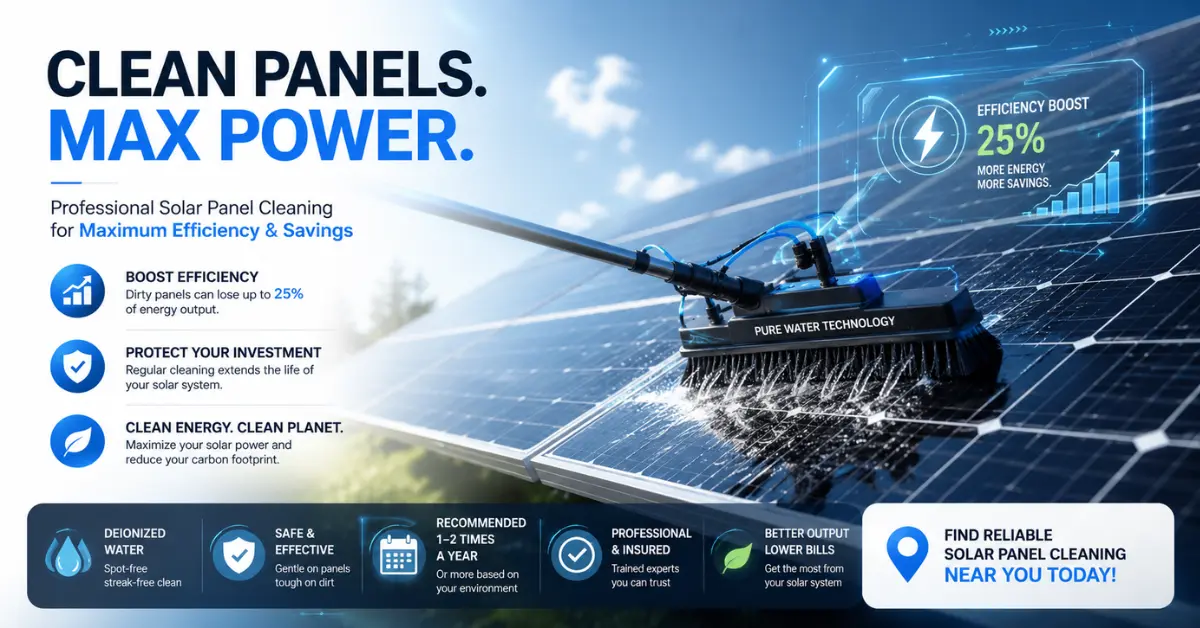
If you’ve invested in solar panels, you already know the financial and environmental benefits. But here’s something many homeowners overlook — dirty solar panels can silently rob you of up to 25% of your energy output. Finding reliable solar panel cleaning near me is one of the smartest steps you can take to protect that investment.
This guide covers everything: how often to clean, what it costs, when to DIY, how to find a trusted local cleaner, and the warning signs that your panels need attention right now.
Why Solar Panel Cleaning Actually Matters
Solar panels work by absorbing sunlight and converting it into electricity. When dust, bird droppings, pollen, or grime coat the surface, that process gets interrupted. Even a thin layer of dirt can reduce efficiency significantly.
Here’s what the numbers look like in real life:
- Dirty panels lose 15–25% efficiency on average
- In severe cases, efficiency loss can reach 30%
- For a home generating $1,800/year in solar savings, a 20% drop means losing $360 every year — just from skipping cleanings
- Professional maintenance typically pays for itself within 2–3 years through improved performance and avoided repairs
That’s not a small number. Regular solar panel cleaning near me pays for itself, often quickly.
How Often Should You Clean Your Solar Panels?
There’s no one-size-fits-all answer. The right frequency depends on where you live and what your panels are exposed to.
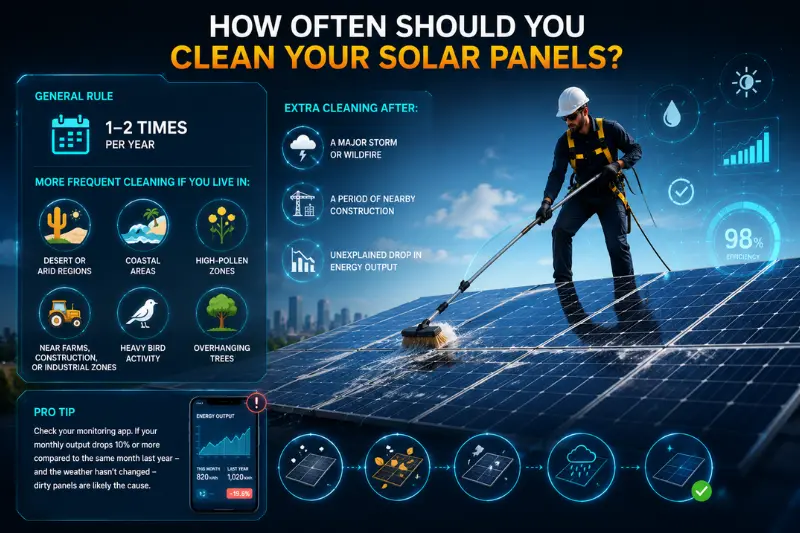
General rule: Most specialists recommend cleaning at least once or twice a year as a baseline habit.
You may need more frequent cleaning if you live in:
- Desert or arid regions (dusty winds can require monthly cleaning during peak seasons)
- Coastal areas (salt buildup needs quarterly removal)
- High-pollen zones (extra cleaning in spring and fall)
- Areas near farms, construction sites, or industrial zones
- Locations with heavy bird activity or overhanging trees
You should also schedule an extra cleaning after:
- A major storm or wildfire
- A period of nearby construction
- Any unexplained drop in your system’s energy output
Pro tip: Check your system’s monitoring app. If your monthly output drops 10% or more compared to the same month last year — and the weather hasn’t changed — dirty panels are likely the cause.
Solar Panel Cleaning Cost: What to Expect in 2025
Cost is one of the top questions homeowners ask when searching for solar panel cleaning near me. Here’s a clear breakdown:
Residential systems (5–20 panels): $150 – $500 per cleaning
Commercial systems (50+ panels): $500 – $1,500+
Annual inspection only: $150 – $350
Comprehensive annual maintenance plan: $200 – $800
What drives the price up or down:
- Number of panels (more panels = more labor)
- Roof pitch and height (steep or high rooftops need safety equipment)
- Panel tilt angle (flat panels accumulate more debris and take longer)
- Your location (high-dust or high-pollution areas often cost more)
- How dirty the panels are (heavier buildup takes more time and materials)
- Ground-mounted vs. rooftop (ground-mounted panels are easier and cheaper to access)
Ground-mounted panels are the most affordable to clean because no roof access is needed.
What Cleaning Methods Do Professionals Use?
This is something competitors rarely explain — and it matters. Not all cleaning is the same.
Deionized water cleaning
is the gold standard. Professionals carry water filtration systems that remove mineral impurities from the water before it touches your panels. Deionized water dries spot-free and removes dust, smog, and grime more effectively than regular tap water or soap — and the results last longer.
Soft brush cleaning
is used for panels with heavier buildup like bird droppings or dried pollen. Gentle, non-abrasive brushes are used to avoid scratching the surface.
What professionals never use:
- Pressure washers (can crack panels and void your warranty instantly)
- Abrasive pads or sponges
- Harsh chemical cleaners
- Hard tap water (leaves mineral deposits)
If a local cleaner shows up with a pressure washer, send them away.
DIY Solar Panel Cleaning: When It Makes Sense (And When It Doesn’t)
Many homeowners can safely handle basic cleaning. Here’s what’s safe to do yourself and what isn’t.
Safe DIY tasks:
- Ground-level visual inspections (use binoculars for roof panels)
- Rinsing accessible panels gently with a garden hose
- Monitoring system performance through your app
- Clearing leaves or large debris from panel edges
When to always call a professional:
- Any roof access is required
- You notice physical cracks, discoloration, or hotspots
- Electrical output has dropped and you’re not sure why
- Your warranty requires professional service for claims
- Heavy buildup like bird nests, tree sap, or post-wildfire ash
DIY cost after setup: Nearly zero after the first year. But the hidden risk is voiding your warranty or damaging panels — which can cost $500–$2,000 to repair.
Signs Your Panels Need Cleaning Right Now
Don’t wait for your annual schedule if you notice any of these warning signs:
- Visible dirt, dust, or bird droppings on the surface
- Your energy bill has crept up without a change in usage
- Your solar monitoring app shows a drop in output
- You haven’t had rain in weeks (rain only removes light dust — heavy soiling needs a wash)
- You live near a wildfire area and smoke has been in the air
- Bird nests or droppings have appeared under or around panels
How to Find the Best Solar Panel Cleaning Near Me
When searching for solar panel cleaning near me, don’t just go with the first name that appears. Here’s how to choose a trustworthy local cleaner:
1. Check their cleaning method first. Ask directly: “Do you use deionized water?” A professional service should know exactly what tools they use and why.
2. Verify they’re insured. Anyone accessing your roof should carry liability insurance. Ask for proof before booking.
3. Look for solar-specific experience. General window washers or pressure washing companies may not understand solar panels. Look for companies that specialize in solar or have documented experience.
4. Read local reviews carefully. Search “[your city] solar panel cleaning reviews” and look for detailed feedback — not just star ratings. Pay attention to comments about communication, care taken with panels, and whether output improved after service.
5. Ask about warranty compliance. Some panel manufacturers require professional cleaning to maintain warranty coverage. A reputable cleaner will know this and can document their service.
6. Request a written quote. Get pricing in writing before the job starts. A trustworthy company won’t surprise you with fees after the fact.
7. Ask if they offer monitoring or maintenance plans. The best solar panel cleaning services near me offer ongoing plans that track your system’s performance and schedule cleanings automatically — removing the guesswork from your end.
The Hidden Cost of Skipping Cleanings
Most solar panel owners focus on the upfront cost of cleaning. But what’s the cost of not cleaning?
- Energy losses of 15–30% per year
- Faster degradation of panel surfaces from abrasive particles
- Potential warranty issues if manufacturers require documented maintenance
- Reduced lifespan of your panels, which are typically warrantied for 25 years
- Higher electricity bills that eat into your solar ROI
Solar panels are a long-term investment — often $15,000 to $30,000 or more. Protecting them with regular solar panel cleaning is one of the lowest-cost ways to maximize your return.
Seasonal Cleaning Guide by Region
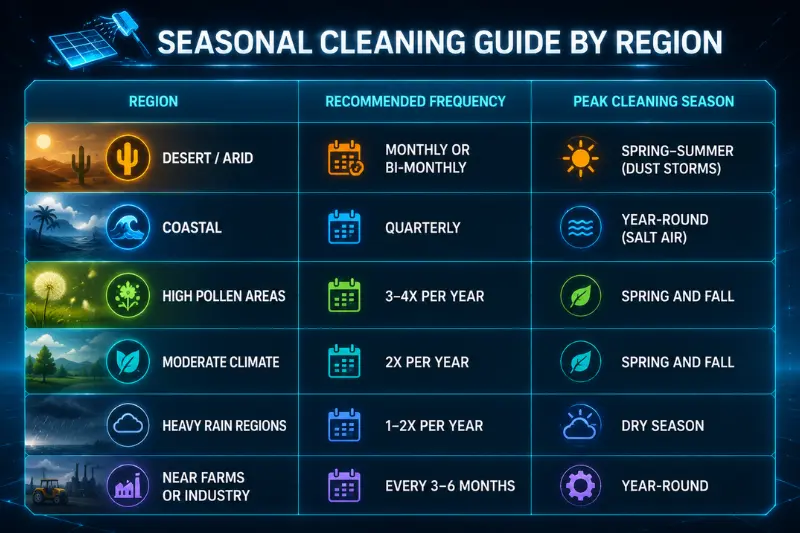
| Region | Recommended Frequency | Peak Cleaning Season |
|---|---|---|
| Desert / Arid | Monthly or bi-monthly | Spring–Summer (dust storms) |
| Coastal | Quarterly | Year-round (salt air) |
| High Pollen Areas | 3–4x per year | Spring and Fall |
| Moderate Climate | 2x per year | Spring and Fall |
| Heavy Rain Regions | 1–2x per year | Dry season |
| Near Farms or Industry | Every 3–6 months | Year-round |
How do I know if my solar panels are dirty enough to need cleaning?
Check your solar monitoring app for a 10% or more drop in output compared to the same period last year. You can also do a visual check from the ground — visible dust, droppings, or discoloration are clear signs.
Can I use a regular garden hose to clean my solar panels?
Yes, for light dust. A gentle rinse in the early morning (when panels are cool) can remove surface dust. However, hard tap water leaves mineral deposits over time. For a thorough cleaning, a professional using deionized water is more effective and safer.
Will my solar panel warranty be voided if I clean them myself?
It depends on your manufacturer. Some warranties require documented professional cleaning for claims to be valid. Always review your warranty terms or contact your installer before cleaning yourself.
How much does solar panel cleaning cost per panel?
On average, professional cleaning costs between $10 and $30 per panel, depending on accessibility, location, and cleaning method. Most residential homeowners pay a flat service fee in the $150–$300 range for a standard system.
Does rain clean solar panels?
Light rain can wash away surface dust, but it does not remove bird droppings, pollen buildup, tree sap, or heavy soiling. Rain can also leave water spots from mineral deposits. Regular professional cleaning is still necessary.
What time of year is best to schedule solar panel cleaning?
Late spring (after pollen season) and early fall (before winter) are the best times for most regions. This keeps panels optimized during peak summer sun and prepares them for the lower-light winter months.
Can dirty solar panels cause permanent damage?
Yes. Over time, particles like sand, bird droppings, and hard water deposits can scratch or etch panel surfaces if left in place. Some staining can be difficult or impossible to fully remove after long exposure.
How do I find solar panel cleaning near me?
Search “[your city] + solar panel cleaning” and filter for companies with solar-specific experience, verified insurance, positive reviews, and a clear cleaning method. Always request a written quote and ask if they use deionized water.
Final Thoughts
Finding the right solar panel cleaning near me doesn’t have to be complicated. The key is acting before you see a problem — not after. Regular cleanings, whether done professionally twice a year or more frequently based on your local environment, keep your system running at full power and protect your long-term investment.
Your solar panels work hard every day. Give them the care they deserve, and they’ll keep saving you money for decades to come.