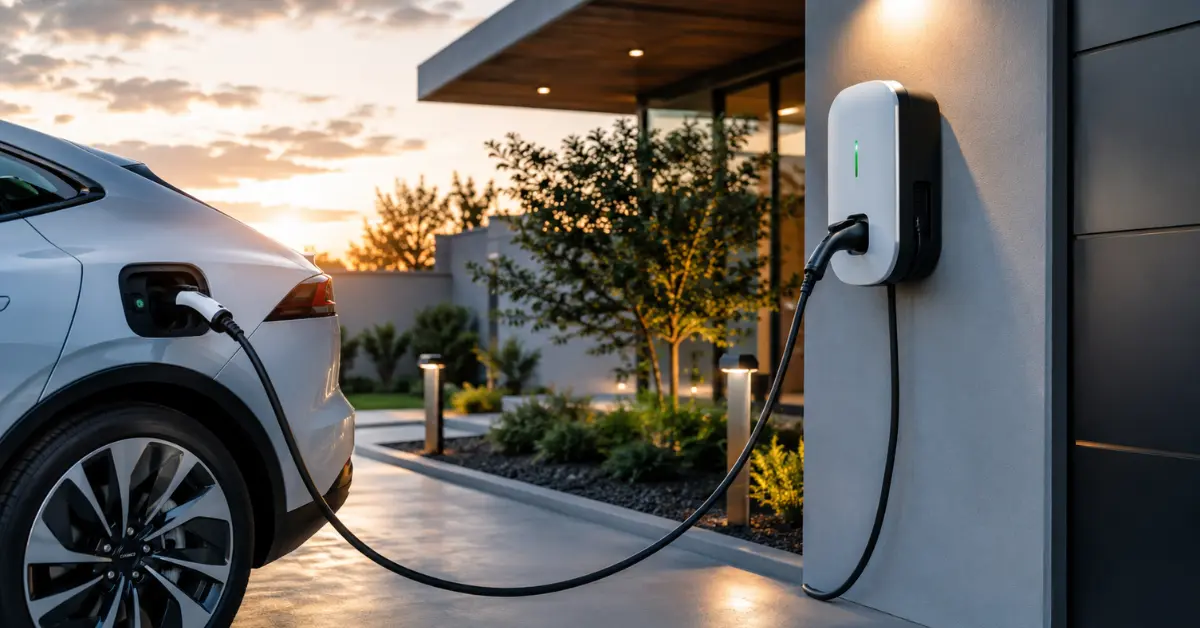
EV charging station installation is the process of setting up a dedicated electrical system including the charger unit, wiring, circuit breaker, and optional networking that safely delivers power from your electrical panel to your electric vehicle. Most homeowners need a Level 2 EV charging station installation, which requires a licensed electrician, a 240-volt dedicated circuit, and a permit from your local building department. The total process typically takes one to three days from site assessment to final inspection. If you skip permitting or hire an uncertified installer, your homeowner’s insurance may not cover electrical fires and resale of your home becomes complicated. That is the direct reality most websites gloss over.
Done correctly, a proper EV charging station installation transforms overnight charging from a 60-hour struggle on a standard outlet into a full charge in eight hours or less.
Why EV Charging Station Installation Matters More Than People Realize
There is a common misconception that EV charging is as simple as plugging in a phone. It is not. Electric vehicles draw sustained, high-amperage current for hours at a time something a standard 120V household outlet was never engineered to handle continuously. This is why EV charging station installation is a distinct electrical project with its own codes, permit requirements, and safety inspections.
The National Electrical Code (NEC) specifically Article 625 governs all electric vehicle supply equipment (EVSE) in the United States. Every EV charging station installation must comply with NEC 625, which mandates continuous-duty ratings at 125% of the charger’s amperage draw. In plain terms: a 40-amp charger requires a 50-amp breaker and appropriately rated wire. Skipping this math is how electrical fires start.
Beyond safety, a properly completed EV charging station installation adds measurable value to your home. According to data from the U.S. Department of Energy’s Alternative Fuels Data Center, properly permitted and inspected charging infrastructure can positively affect property assessments something that a rushed, unpermitted job permanently undermines.
The Real Step-by-Step Process of EV Charging Station Installation
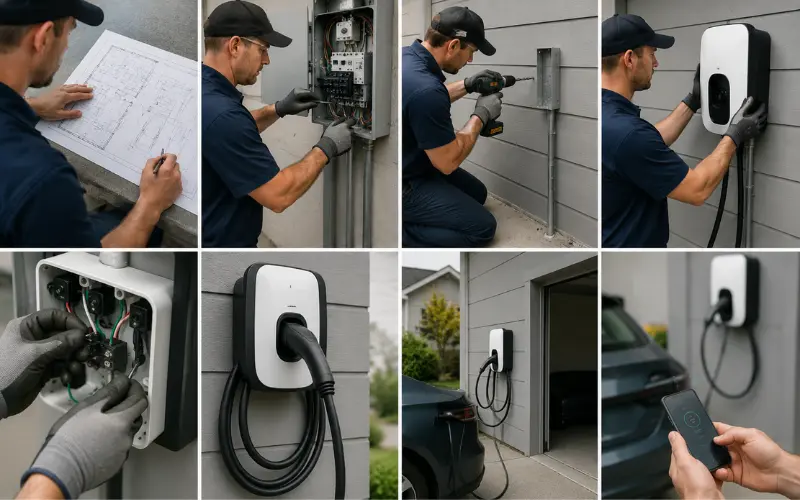
Understanding the full sequence of EV charging station installation separates homeowners who get it right the first time from those who face expensive corrections later.
Step 1 Electrical Panel Assessment
Before any hardware is ordered, a licensed electrician evaluates your main service panel. Most modern homes have 200-amp service, which is usually sufficient. Older homes with 100-amp panels often require a service upgrade before EV charging station installation can proceed an added cost ranging from $1,500 to $4,000 that many online cost guides quietly omit.
Step 2 Choosing the Right Level
Level 1 EV charging station installation uses a standard 120V outlet and adds only 3–5 miles of range per hour — fine for plug-in hybrids, but inadequate for most battery electric vehicles. Level 2 EV charging station installation at 240V delivers 15–30 miles of range per hour and is the practical standard for daily home use. Level 3 (DC Fast Charging) is commercial-grade equipment requiring three-phase power and is rarely appropriate for residential properties.
Step 3 Permit Acquisition
This step is where most DIY attempts fall apart. EV charging station installation requires an electrical permit in nearly every U.S. jurisdiction. Your installer submits a permit application with a wiring diagram and equipment specifications. Some municipalities offer same-day approval; others take two to four weeks. Budgeting time for permitting is essential and non-negotiable.
Step 4 Running the Circuit
The electrician installs a dedicated 240V circuit from your panel to the charger location — typically the garage wall. The wire gauge must match the breaker size: 6 AWG copper for a 50-amp circuit, 8 AWG for 40 amps. The distance from your panel affects cost; every additional foot of conduit adds labor and materials.
Step 5 Mounting and Connecting the EVSE
The charger unit (the EVSE — Electric Vehicle Supply Equipment) is mounted to the wall, connected to the new circuit, and tested for proper voltage and ground continuity. Smart chargers are connected to your home Wi-Fi during this phase.
Step 6 Inspection and Close-Out
A municipal electrical inspector visits your property, verifies that the EV charging station installation meets NEC 625 and local amendments, and signs off the permit. Only after this sign-off is the installation legally complete and insurable.
What EV Charging Station Installation Actually Costs
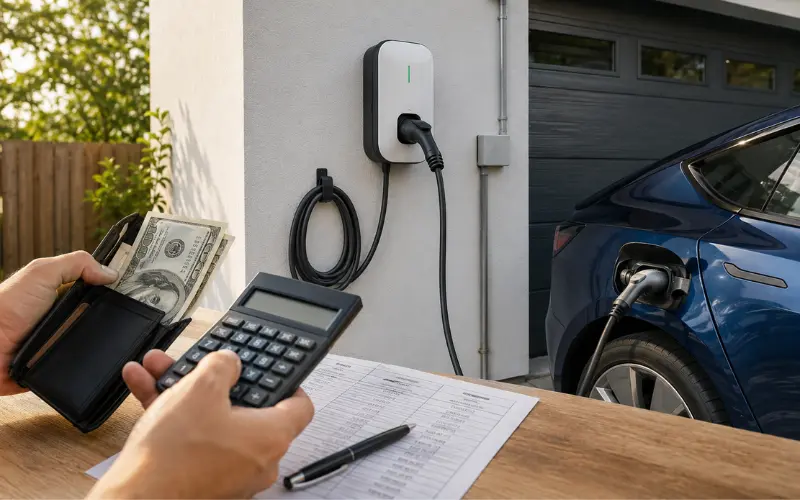
The honest cost of EV charging station installation ranges from $400 to $2,500 for most standard residential jobs. That range covers equipment ($150–$900 for the EVSE unit), labor ($200–$800 depending on complexity and region), permit fees ($50–$250), and any incidental materials. Qmerit, the largest certified installer network in North America, publishes a starting price of $749 for a standard installation a reliable baseline figure.
Where costs escalate: panel upgrades, trenching conduit underground to a detached garage, running wire over long distances, or installing in an older home with aluminum wiring all push the final bill higher. Getting two or three quotes from certified electricians before committing is the single most impactful cost-saving step most guides fail to emphasize enough.
Alternative Approaches: When Standard Installation Isn’t Your Only Option
Not every property suits a traditional hardwired EV charging station installation. Apartment dwellers, renters, and those with temporary charging needs have legitimate alternatives.
Plug-in Level 2 chargers sometimes called portable EVSE use a NEMA 14-50 outlet (the same outlet a dryer uses) and can be installed for significantly less than a hardwired unit. If your garage or parking area already has a 240V outlet, the electrical work is minimal. The trade-off is slightly lower amperage in some models, but for most EV owners this difference is imperceptible overnight.
For commercial and fleet operators, mobile DC fast chargers like the Lincoln Electric Velion 50kW offer a completely different model: no concrete pad, no permanent permit, and scalable power output (12.5kW to 50kW) that can be relocated as fleet needs evolve. This approach is gaining traction for construction sites, dealerships, and emergency response deployments use cases traditional EV charging station installation simply cannot serve flexibly.
Multi-unit residential properties and workplaces face their own distinct challenges. Load management software offered by ChargePoint and others allows multiple Level 2 chargers to share a single electrical circuit by dynamically distributing power, dramatically reducing the infrastructure cost of EV charging station installation across a parking lot.
What Competitors Miss: The Inspection Failure Rate Problem
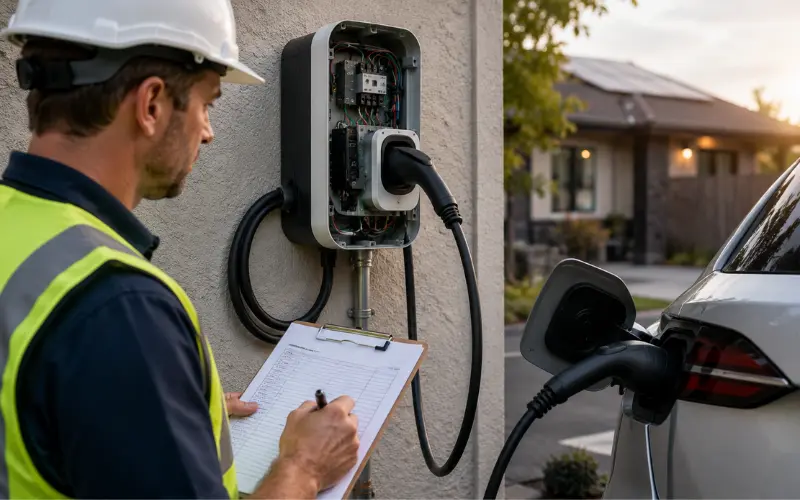
One thing almost no competitor article discusses is inspection failure rates. Electrical inspectors reject EV charging station installation jobs for a predictable set of reasons: improper wire gauge, missing or incorrect GFCI protection, inadequate conduit fill, and EVSE units that are not UL-listed. Rejection means scheduling a re-inspection, which delays your ability to use the charger and, in some municipalities, accrues additional fees.
The practical fix is straightforward: hire installers who are EVITP-certified (Electric Vehicle Infrastructure Training Program). The U.S. Department of Energy’s Alternative Fuels Data Center maintains a directory of EVITP-certified contractors specifically because non-specialists consistently generate higher re-inspection rates. This certification is the single most underutilized vetting criterion among homeowners shopping for EV charging station installation services.
Frequently Asked Questions
Q1: How long does EV charging station installation take?
The physical installation takes two to four hours for a standard residential job. Including permit approval and the inspector visit, the full timeline runs one to three weeks depending on your municipality.
Q2: Do I need a permit for EV charging station installation?
In virtually every U.S. jurisdiction, yes. Unpermitted electrical work creates insurance liability and complicates home sales.
Q3: Can I install an EV charger myself?
Technically possible in some states if you own the property, but not advisable. NEC 625 compliance requires knowledge of continuous-duty load calculations that most homeowners do not possess, and DIY work is routinely rejected at inspection.
Q4: What is the best charger for home EV charging station installation?
A 40-amp Level 2 hardwired charger is the practical standard for most EVs, delivering around 30 miles of range per hour and future-proofing for vehicles with larger batteries.
Q5: Will EV charging station installation increase my electric bill significantly?
The average EV uses 25–30 kWh per 100 miles. At a national average of $0.13/kWh, that is roughly $3.50 per 100 miles — far less than gasoline. Charging during off-peak hours (typically late night) reduces costs further.
Q6: Does homeowner’s insurance cover EV charging station installation?
Most policies cover permitted, inspected installations. Unpermitted installations are commonly excluded from coverage in the event of an electrical fire.
Q7: How do I know if my electrical panel can support an EV charger?
A licensed electrician performs a load calculation. If your panel is at or near capacity, a service upgrade may be required before EV charging station installation can proceed.
Q8: Can I get a tax credit for EV charging station installation?
The federal 30C Alternative Fuel Vehicle Refueling Property Credit allows up to 30% (capped at $1,000 for individuals) of EV charging station installation costs for eligible properties. The Argonne National Laboratory’s 30C Tax Credit Eligibility Locator tool identifies qualifying locations.
Q9: What is the difference between a hardwired and plug-in EV charger?
Hardwired units are permanently connected to your electrical system and typically support higher amperage. Plug-in units connect to a NEMA 14-50 outlet and are more portable. Both are valid EV charging station installation approaches; the right choice depends on your panel, budget, and future plans.
Q10: How do I find a certified EV charger installer?
Use the EVITP contractor directory at evitp.org, or work with established installer networks like Qmerit, which partners with major automakers and maintains rigorous installer certification standards.
Final Thought
EV charging station installation is not complicated but it is exacting. The gap between a quick, cheap job and a safe, code-compliant installation is precisely the gap between an installation that passes inspection and one that creates liability for years. Prioritize EVITP-certified installers, pull your permit without hesitation, and treat the municipal inspection not as a bureaucratic hurdle but as a free quality-assurance check on a system that will draw high current in your home every single night. Get those fundamentals right, and everything else about EV ownership becomes dramatically simpler.
Think of your EV charging station installation as infrastructure, not just a convenience upgrade. The homeowners who approach it that way investing in the right breaker size, the correct wire gauge, a smart charger with load management, and a future-ready 50-amp circuit even if their current car only needs 40 are the ones who never have to touch the system again for a decade. EV technology is accelerating fast. Battery capacities are growing, charging speeds are increasing, and the next vehicle in your driveway will almost certainly demand more from your electrical system than the one you drive today. A properly spec’d EV charging station installation done once, done correctly, and done to code is the kind of decision that quietly pays you back every single morning you wake up to a full charge without ever having visited a gas station.